Showing posts with label Banking. Show all posts

Friday, 8 April 2016

Pan Africa Life Additional Investments into Gateway General Insurance and Its Performance after Acquisition

Pan Africa buys additional stake in Gateway Insurance

By VICTOR JUMA, vjuma@ke.nationmedia.com  http://www.businessdailyafrica.com/Corporate-News
Pan Africa Insurance Holdings chief executive Mugo Kibati. PHOTO | FILE
Pan Africa Insurance Holdings chief executive Mugo Kibati. PHOTO | FILE 
By VICTOR JUMA, vjuma@ke.nationmedia.com

Posted  Monday, March 28   2016 at  23:00
IN SUMMARY
  • Pan Africa first bought into the general insurer in March last year, acquiring a 51 per cent stake for Sh561 million.
  • The company later raised its interest in Gateway to 56 per cent at a cost of about Sh55 million.
  • The move by Pan Africa to raise its stake in Gateway signals its confidence in the company’s future prospects though the subsidiary’s earnings have deteriorated following its acquisition.
Pan Africa Insurance Holdings has acquired an additional five per cent stake in Gateway Insurance, raising its equity in the subsidiary to 56 per cent.
The company had announced that it would buy additional shares in Gateway to make the subsidiary’s founders comply with insurance regulations that cap ownership by individuals at 25 per cent.Pan Africa chief executive Mugo Kibati told the Business Daily that the company subsequently raised its interest in Gateway to 56 per cent at a cost of about Sh55 million.
Pan Africa did not say to what level it was prepared to raise its stake in Gateway but noted that the extra shares would be bought from the family of the company’s founder, the late Godfrey Karuri.
The additional shares were to be bought at the same price of Sh17.56 per share that Pan Africa paid to buy the initial 51 per cent stake.
The move by Pan Africa to raise its stake in Gateway signals its confidence in the company’s future prospects though the subsidiary’s earnings have deteriorated following its acquisition.
Acquisition of Gateway marked a change in strategy at Pan Africa which in 2011 exited the general insurance business to focus on life policies by selling its 39.9 stake in APA Insurance for Sh855 million.
The company later said it needed to re-enter the general insurance business if it was to get a share of economic growth driven by sectors such as construction.
This prompted the Gateway acquisition whose completion coincided with increased competition in Pan Africa’s mainstay life insurance business where it previously was among the largest players.
Gateway’s performance has, however, disappointed, with Pan Africa taking a Sh564 million hit from the subsidiary last year and contributing to a 97 per cent fall in the parent firm’s profit in the year ended December.
Pan Africa reported that the excess value it anticipated from the takeover of Gateway has surpassed the net worth of the subsidiary by the Sh564 million.
This means Pan Africa paid a hefty premium in the acquisition whose payback is likely to take longer than initially expected.
The accounting loss contributed to the 97 per cent drop in the listed firm’s net profit to Sh27.3 million in the review period, down from Sh871.1 million the year before.

Wednesday, 10 June 2015

Jubilee Insurance Kenya Chief Executive Patrick Tumbo is Africa CEO of the Year in the recently concluded 42nd Conference and General Assembly of Africa Insurance Organisation (AIO)

Jubilee Kenya boss named Africa CEO of the year

By MUGAMBI MUTEGI  Posted  Tuesday, June 2  2015 at  21:18 @Businessdailyafrica
 
 
Jubilee Insurance Kenya CEO Patrick Tumbo. PHOTO | FILE
Jubilee Insurance Kenya CEO Patrick Tumbo. PHOTO | FILE 

The Jubilee Insurance Kenya CEO Patrick Tumbo has been named chief executive officer of the year at an award ceremony in which 362 member companies from across the continent participated.
Mr Tumbo got the recognition at the recently concluded 42nd Conference and General Assembly of Africa Insurance Organisation (AIO) in Tunisia.
Organisers of the awards said the winner was selected based on successful product development, excellent service delivery and introducing innovative distribution channels targeting grassroots customers.
“We need to listen to our customers and develop products that serve specific customer needs. That way, the insurance sector will experience a revolutionary change for the better,” said Mr Tumbo.
Nigeria’s Mutual Benefits Insurance won the Innovation of the Year award while the Insurance Company of the Year award went to Misr Insurance Company of Egypt.
Increased premiums
Jubilee Holdings reported a 24 per cent jump in net profit for the year ended December to Sh3.1 billion, helped mainly by increased premiums, with Kenya being its biggest contributing business unit.
Gross premiums increased 30 per cent to Sh30.3 billion, making the company Kenya’s largest in both general and life insurance business.
The insurer recorded double-digit growth in all its insurance operations, including pensions and medical.
The AIO is made up of member insurers across 55 countries in Africa.
The awards are meant to promote growth of the insurance sector through good corporate governance, insurance practice, leadership and risk management.
“Sharing and dissemination of new successful and practical ideas in the industry can be a great tool to fast-track the development of insurance in the continent,” said AIO secretary-general Prisca Soraes.
The conference, which took place between May 24 and May 27, focused on the rise of political risk in the continent and the need for new risk pools to respond to natural catastrophic risk.

Monday, 24 November 2014

Bitcoin Digital Lessons from M-pesa

Digital Currency Regulation in East Africa

by http://community.ihub.co.ke/blogs/21645/digital-currency-regulation-in-east-africa

Digital Currency Regulation in East Africa
Guest Blog: Michael Kimani
What is Bitcoin? – A puzzling question posed by everyone coming across Bitcoin for the first time. The Bitcoin Kenya Meet up group regularly convenes at the iHub for monthly open discussions on this subject. The discussion on November 5 was ‘BitLegal Status Around the World’ – a cursory look at what regulators and government authorities all over have to say about new forms of digital currency. It is important as it defines a domain for regulators in East Africa. Interestingly, regulators just like regular folks, have trouble wrapping their head around ‘What is Bitcoin?’
IMO, Bitcoin is what Nassim Taleb - a scholar, refers to as a black swan–
“An event that comes as a surprise, has a major effect, and is often inappropriately rationalized after the fact with the benefit. image 2
Bitcoin is one of the most important breakthroughs of the digital age since the internet! Bitcoin is a global secure layer on top of the internet with online payment capabilities. Just to get a clear picture of how immense it is, this brief 4min video will get you up to speed.
Bitcoin is a platform with a long list of possible applications built on top of it. One of these apps, is bitcoin, the currency. These features make it a unique global payment network that anyone can take part in. It is a currency, asset, platform, decentralized network – all wrapped into one burrito.
Understandably, government agencies and financial regulators find it difficult to demarcate a regulatory framework for innovative digital currencies such as Bitcoin. Largely, it has been a net positive; a mixed bag of official statements falling on the‘Wait and See’ approach, early guidance on its use, adoption and Bitcoin start-ups. A couple have out rightly banned its use – Iceland and Ecuador in favour of their own digital currency.
Digital Currency Regulation in Kenya – Lessons from Mpesa
In a lot of ways, the ongoing debate on Bitcoin regulation in the rest of the world is surprisingly similar to that of MPESA in its infancy stage (Pre- 2008). Mpesa, just like Bitcoin was a unique innovation that did not fall within existing regulatory framework during the time. A case study report by the AFI [Enabling Mobile Money Transfer – CBKs treatment of Mpesa] pdf here, details the early regulatory considerations of Mpesa involving multiple stakeholders – GoK, National Assembly, Safaricom, Central Bank of Kenya, Banks and the Kenyan public.
In retrospect, we can all agree it was wise to foster Mpesa. Because it remedied an immediate financial inclusion challenge, letting it grow into its potential was crucial all the while adhering to money laundering and money transfer regulations. Was it a bank? Was it a payment network? Did it fall under the law?
Eventually, the ability of this innovation to radically offer access to financial services by the unbanked tipped the scale and won it for Mpesa. A watershed that has defined Kenya in more ways than we can quantify. The Central bank of Kenya commendably handled it well, recognizing the best way to tap into the mobile phone as a money transfer tool.
Bitcoin regulation around the world
pic 3
Thiswiki is a comprehensive start for a full list of what regulators’ guidance in different countries, albeit several months old has been.
Bitcoin and digital currencies have a place in connecting Kenya and East Africa to the global market and commerce. Mpesa has worked well for money transfers within the country – Bitcoin and digital currencies complement that by making global payments faster, cheaper and straight into/from your phone!  The internet made it possible for all of us to take part in a global economy, Bitcoin enhances global value exchange as cash for the internet!
Finally, if you couldn’t make it for our meet up, you can view the slides here. We are having our next meet up on the 1st of December on ‘Buying, Selling, Trading and Securing Bitcoins’ at the iHub. See the event detailshere. For questions and info, email us atinfo@africandca.orgor myself atmkimani@africandca.org.


About the Author:Michael Kimani is the Lead Coordinator at the ADCA @African_DCA www.africandca.org Based in Nairobi, Kimani advocates bitcoin & digital currencies in East Africa. He also regularly writes on digital finance, electronic payments and digital currencies in East Africa on @pesa_Africa.

Thursday, 14 August 2014

Best Insurance Companies in Kenya Past Performance

Pan Africa Life Innovation and Jubilee Lifetime Achievement
Article @By: Yarinka Lukiza
http://www.bizrika.com/banking-and-finance/best-insurance-companies-in-kenya-named/

The 2011 best insurance companies in Kenya were named in the annual gala night organized by Think Business; a Kenyan based financial sector-focused company that specializes in strategic business intelligence, research and publishing.
During the colorful gala night held at a Nairobi hotel on 21 July, Chartis Kenya and Pan Africa Life were named the best insurance companies in Kenya in the General Life and Composite Business categories. The first and second runners-up positions in the best business category went to Jubilee and CIC Insurance respectively, while British American Insurance and Jubilee Insurance clinched first and second positions respectively in the Life Business category. CIC Insurance was declared the only runner-up in the Composite Business category.
Pan Africa Life and Jubilee Insurance emerged best in the Best Company in ICT category, coming in first and second place respectively. No company was deemed fit to win the Best Corporate Broker category.
Jubilee Insurance showed up again to scoop the Best Insurance Company in the Risk Management category.

Other awards and winners

Best Insurance Company in Claims Settlement (Life Business)
Winner: Apollo Life Assurance
Runners-up: Pan Africa Life and CIC Insurance
Best Insurance Company in Claims Settlement (General Business)
Winner: APA Insurance
Runners-up: Chartis Kenya and Jubilee insurance
Major Loss Award
Winner: Jubilee Insurance
Runners-up: APA Insurance
Best Fraud Detection and Prevention Initiative
Winner: Pan Africa Life

Best Medical Insurance Provider

Winner: AAR Health Services
Runners-up: Goldstar Health Care
Best Medical Insurance Underwriter
Winner: Jubilee Insurance
Best Customer Service Innovation
Winner: Jubilee Insurance
Runners-up: CIC and AAR
Best Insurance Company in Customer satisfaction
Winner: CFC Life
Runners-up: Britak and Kenindia
Best marketing Initiative of the Year
Winner: CIC Insurance
Runners-up: APA and Jubilee Insurance
Best Training Initiative of the Year
Winner: CIC
Runners-up: Pan Africa Life and Jubilee Insurance
Most Socially Responsible Corporate
Winner: AAR Health Services and Jubilee Insurance
Overall, Jubilee Insurance won the largest number of awards. The company bagged 11 awards in total and crowned it with the Lifetime Achievement in Insurance Award which went to Nizar Juma, the Jubilee Holdings chairman.
Commenting on the awards, Mr. Ochieng Oloo, the CEO of Think Business, said 2010 was a good year for the Kenyan insurance sector, as demonstrated by strong growth in total assets which went up from Ksh174 billion in 2009 to Ksh240 billion in 2010, representing an increase of 27%.
The industry’s profit before tax swelled by a record 42% to hit Ksh11.9 billion, up from Ksh6.8 billion in 2009.
Medical cover leading
Of all the insured Kenyans, 74% have taken up medical cover while 69% have insured against motor vehicle risks. Insurance covers for assets, education and accident account for 40%, 44% and 48% respectively.

Tuesday, 3 June 2014

Africa Biggest Economy is Nigeria

Nigeria overtakes South Africa as continent’s largest economy


Nigeria today officially overtook South Africa as the largest economy on the continent, after the West African country changed the base year for calculating its gross domestic product (GDP).
Nigeria’s National Bureau of Statistics (NBS) on Sunday presented the country’s rebased GDP figure, revealing the economy is significantly bigger than originally reported. Nigeria’s GDP in 2013 was US$509.9bn, much higher than that of South Africa.
The base year is the benchmark for all calculations used in working out the GDP of a country, as it determines the year in which prices are held constant and enables one to distinguish between economic growth and inflation.
The majority of higher income countries revise their base year every five years to reflect changes in the nature of output and consumption. Up until today, Nigeria’s GDP was calculated using 1990 as the base year, which does not account for the rapid development of some of the country’s booming industries, such as telecommunications and entertainment (notably the Nollywood film industry).
Nigerians however shouldn’t expect to see any material benefits from the GDP rebasing. According Renaissance Captial chief economist Charles Robertson, the rebasing is simply “the NBS… doing a better job in measuring the output that is already happening”.
“Improving the measurement of GDP does not raise monthly wages. It does not lift consumption of imports. It does not make Nigeria better off in any obvious material way… The important fact to bear in mind is that GDP is only being recorded better. Rebasing does not mean Nigerians are better off – it just means they are better off than official statistics previously indicated,” said Robertson in an earlier note.
Being Africa’s largest economy could however hold some psychological advantages. “It would be interesting to see how international relations will be affected when South Africa is no longer the largest African economy – South Africa is, for example, the only African country represented in the G20,” wrote Roelof Horne, portfolio manager at Investec Asset Management in an opinion piece published by How we made it in Africa on Friday.
“South Africa was historically the ‘go-to’ country for investment into Africa. However, the reality is that other regions are increasingly asserting their economic voice and this has resulted in several multinational corporations opting to have their Africa base in countries such as Kenya or Nigeria, instead of South Africa,” Horne added.
The rebasing will also improve Nigeria’s balance sheet. “This should lead to lower borrowing costs for the government, which is ultimately beneficial for the country’s citizens,” said Horne.
According to Robertson, Nigeria’s growth rate is likely to be revised down following the rebasing. “Instead of around 7% annual growth over the previous decade, the higher GDP base means growth may turn out to have been closer to 5-6%.

Wednesday, 13 November 2013

Kenya Insurance Company Buys South Africa Based Asset Management Firm

Pan Africa Insurance closes Sanlam Kenya acquisition

By GEORGE NGIGI, Business Daily http://www.businessdailyafrica.com/ @All Rights Reserved

Members of the public pass by a Sanlam billboard in Nairobi. Pan Africa Insurance has bought the Kenyan operations of the SA firm. FILE
Members of the public pass by a Sanlam billboard in Nairobi. Pan Africa Insurance has bought the Kenyan operations of the SA firm. 
In Summary
  • Pan Africa Insurance said it had acquired 72.5 per cent shares of Sanlam and a further 10 per cent stake owned by a former chief executive of the investment firm.
  • The acquisition gives the insurance firm a free hand in the management of funds mobilised through its life business.
  • Unit trusts have are becoming more popular in the country following their opening up to the lower end market by inviting small savers to their fold.

Pan Africa Insurance has bought out the Kenyan operations of South Africa-based assets manager Sanlam Investment, concluding a phased acquisition that started in 2008. 
The Nairobi Securities Exchange listed insurer said that it had acquired 72.5 per cent shares of Sanlam and a further 10 per cent stake owned by a former chief executive of the investment firm.
The acquisition gives the insurance firm a free hand in the management of funds mobilised through its life business.
“The transaction will result in Sanlam Investment Management Kenya being a wholly owned subsidiary of the company. This will enable easier distribution of investment products by the group’s financial advisors,” said Pan Africa’s chief executive Tom Gitogo.
Both firms have common shareholding in South Africa’s Sanlam, a financial services group that is listed at the Johannesburg Stock Exchange and Namibian Stock Exchange.
The insurer follows the footstep of other insurance companies such as CIC, Britam and UAP that have lately opened their own fund management firms to invest their collections from life policies.
Pan Africa declined to disclose the value of the transaction, stating that it was based on the net book value as at end of last year. Pan Africa bought a 17.5 per cent stake in Sanlam for Sh3.8 million in 2008 in a deal that at the time valued the fund management company at Sh21.7 million.
Sanlam, the parent company, owned 55.7 per cent of Pan Africa Insurance as at the end of 2012 through an entity named Hubris Holdings Ltd.
It has however stated that it wants to increase its shareholding in the insurance company to 60 per cent by buying shares in the open market so as to have more control of its management.
Mr Gitogo said the acquired firm would retain its name while disclosing intent to invite individuals and institutions to invest through them using unit trusts. “We are looking forward to entering the unit trusts market,” he said.
Unit Trusts provide investors an opportunity to invest in a portfolio of stocks or fixed-income securities or both, without directly going to the market themselves. The investors deposit funds with fund managers, who charge them a management fee for their services.
Unit trusts have are becoming more popular in the country following their opening up to the lower end market by inviting small savers to their fold.
On Tuesday the insurer’s share price went up by two shillings to Sh61.50, on a trading volume of 25,000 shares.Awesome Insurance

Monday, 22 July 2013

soleRebels: Africa’s largest footwear brands and transforming the economic landscape in Ethiopia

How soleRebels became one of Africa’s most celebrated footwear brands. http://www.solerebelsfootwear.co/#

An innovative footwear manufacturer that pays fair wages and uses locally sourced materials is helping to transform the economic landscape in Ethiopia. SoleRebels, which was founded by Bethlehem Tilahun Alemu in 2004, has become one of Africa’s largest footwear brands, with its range of artisan-made shoes now selling in 55 countries. In 2011, the company ramped up US$2 million in sales and it is expecting to generate over US$15-20 million in revenue by 2015.
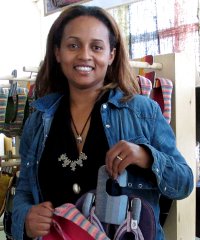
Bethlehem Tilahun Alemu
Bethlehem Tilahun Alemu-Ethiopia Entrepreneur
Alemu has become one of Africa’s most celebrated businesswomen. She was featured on the front cover of Forbes magazine in January 2012, and was selected as a “Young Global Leader” by the World Economic Forum 2011. In June 2012, she won the award for “Most Outstanding Businesswoman” at the annual African Business Awards, organised by African Business magazine.
Export-oriented success story
Her success with soleRebels is regularly cited as a sign that Ethiopia is ready to transition from being reliant on foreign aid to being able to direct its economic future by exploiting home grown skills, resources and business opportunities.
The company is also held up as inspiration for Ethiopia’s newly-emerging private sector, particularly as an example of an export oriented success story.
Alemu explained how she set up the company in a small village on the outskirts of Addis Ababa, “Having grown up watching our family and neighbours struggling, we decided to create the ‘better life’ we were all waiting for by harnessing our community’s incredible artisan skills and channeling them into a sustainable, global, fair trade, footwear business.”
She continued, “We selected shoes because we saw that footwear was an excellent platform to begin to share many of Ethiopia’s indigenous eco-sensible craft heritages and artisan talents with the world. Our approach to footwear creation – hand-crafted and eco-sensible – meant we could source and make almost all our materials locally, thereby creating an export product from 100% local inputs.”
Tyre-soled shoes
The soleRebels footwear range includes sandals, flip flops and shoes with soles made from recycled car tyres. Alemu explained that the recycled car tyre-soled shoe has existed in Ethiopia for a long time. “It was the footwear from back in the day when the original “soleRebels” fought off the invading forces and kept Ethiopia as the only African nation to never be colonised! We took this wonderful, indigenous, age-old recycling tradition and fused it with fantastic Ethiopian artisan crafts and excellent modern design sensibilities, and turned it into footwear that has universal flavour and appeal.”
She is proud of the production process, stating that all the company’s styles incorporate as much recycled and sustainable materials as possible, with ingredients like hand-spun and hand-loomed organic cotton fabrics, and natural fibres, including Abyssinian hemp and koba. However, she shuns the term, ‘green business’, stating that she regards it as something of a fad. “We are embracing these deeply sustainable and traditionally zero-carbon methods of production and materials because they are integral parts of Ethiopia’s cultural fabric, a tradition which we grew up within and feel passionate about preserving.”
Workers’ rights
SoleRebels is also setting a high standard for workers’ rights, providing 100% medical coverage for employees and their families and free doctor-run medical checks, as well as providing transport to and from the worksite for workers with disabilities. Alemu insists that workers are treated with respect, noting that on average the company’s 90 employees get paid four times the legal minimum wage and three times the industry average wage for similar work.
Unlike most companies in the apparel and footwear sector, soleRebels does not use a quota system. Alemu explained, “The quota system of work, endemic in the fashion business always struck us as truly demeaning. It is a system that shows no confidence that workers can be incentivised to achieve targets and it creates a hostile working environment. SoleRebels pays all workers based on negotiated wages that are subject to mutually agreed, company-wide goals. This means that we are all in it together in terms of making sure that deadlines are met and that top-notch product quality is always achieved.”
Expansion
In order to meet growing demand, the company is constructing a new production facility and when it is finished Alemu expects the workforce to grow in number to around 300 employees. “Built with indigenous, eco-sensible materials and employing 100% renewable and self-generating power, this first of its kind production facility will serve as a leading innovation centre, allowing us to develop the cultural wealth of the country, while simultaneously expanding and enhancing our own production capabilities.”
Alemu believes that her company can be emulated by others and help foster inclusive, sustainable development in Ethiopia. She said, “soleRebels is living proof that creating innovative world class products and trading them with the world is the best road to greater shared prosperity for developing nations like ours.”
She also sees lessons for the rest of Africa. “Today, Africa accounts for a mere two percent of global trade. If sub Saharan Africa were to increase that share by only one per cent, it would generate additional export revenues each year greater than the total amount of annual assistance that Africa currently receives. We simply need the opportunity to increase our market share, something every good, strong, global business seeks to do.”
This article was first published in UNIDO’s Making It magazine

Sunday, 14 July 2013

The Top Six Biggest Companies In Kenya And Their Shareholders

Article by Kenyaentrepreneur    @ http://kenyaentrepreneur.hubpages.com/
In this hub I will be listing the top six biggest indigenous Kenyan companies and their shareholders (people who own them). In indigenous I mean the companies that have their roots in Kenya or in other words that were registered and incorporated in Kenya. The likes of Barclays bank of Kenya and Standard chartered Bank are excluded because their holding companies are foreign in nature meaning they are owned outside Kenya and therefore don’t qualify to be included here.
For now though, here below are the top 6 biggest companies in Kenya in no particular order

1. Kenya airways
Website: http://www.kenya-airways.com
C.E.O: Titus Naikuni
Founded in the year 1977 after the collapse of the east African community, Kenya airways is today one of the biggest national carriers in the African continent. With over 100 flight destinations worldwide, the pride of Africa as is commonly known is undoubtedly one of the biggest, finest and respected companies in Kenya and beyond. The airline is a public-private partnership company after privatization back in the year 1966. The airlines stock is traded in the Nairobi securities exchange and the top shareholders are as follows;
  • KLM has a 26% ownership
  • Government of Kenya- 23%
  • Paul Wanderi Ndungu- 3.32%
  • Barclays bank Kenya nominees limited 2.5%
  • Mansukhlal Khetshi Shah 2.03%
  • Kumar Shah 1.26%
  • Khetshi Dharamshi and company limited 1.13%
  • Rameshchandra Shah 1.01%
  • Apollo insurance company limited 0.94%
  • Shah Mahendra Shah 0.92%

2. Safaricom limited
Website: http://www.safaricom.co.ke
C.E.O: Bob Collymore
With over 18 million subscribers safaricom is the mobile phone and communications provider of choice in Kenya and as such the company is the biggest company not only in Kenya but in the east and central Africa region. Safaricom may not be offering cheaper calling rates like its competitors like Airtel and Orange but what has made them the darling of Kenya mobile phone users is the award winning M-pesa service (mobile money transfer service). One can transfer as little as ksh.100 to as much as ksh. 200,000 in a day from one mobile phone to another and withdrawals can be done any of the nearest over 20,000 agent outlets across the country at a very affordable rate.
The company’s main products that generate chunk of its revenue are voice, data and mobile money transfer services. U.K telecommunication company, Vodafone owns 40% of safaricom limited while the remaining 60% is owned by individual and corporate investors who are mostly Kenyans.

3. East African breweries limited
Website: http://www.eabl.com
C.E.O: Seni Adetu
Founded in 1922 east African breweries is one of the biggest companies in Kenya and the east African region. The Ruaraka based alcoholic beverage manufacturer produces some of the top beer and wine brands in Kenya and this is testified by the presence of its products in every Kenyan bar. The company’s biggest shareholder is Diageo plc of the United Kingdom. The top shareholders of eabl are as follows
  • Diageo Kenya limited 42.82%
  • N.S.S.F board of trustees 4.82%
  • Diageo holdings 4.60%
  • Barclays Kenya nominees account 3.06%
  • Guinness Overseas limited 2.61%
  • Karsandas babla 2%
  • Kenya reinsurance corporation limited 1.38%
4. Kenya commercial bank limited
Website: http://www.kcbbankgroup.com
C.E.O: Martin Oduor Otieno
Kenya commercial bank is the banking and financial service provider of choice for many individual, business as well as corporate customers in Kenya and the larger east African community region. With assets of over $2.65 billion and a branch network of over 168 branches in Kenya alone KCB is truly one of the biggest brands in Kenya. Share stocks of Kenya commercial bank are listed in the Nairobi securities exchange as well as cross listed in Uganda securities exchange, Rwanda stock exchange and Dar-es-salaam stock exchange.
The top shareholders of Kenya commercial bank are as follows;
  • Government of Kenya 26.23%
  • Icdc investment company 5.04%
  • N.S.S.F 4.74%
  • Kcb staff pension fund 3.43%
  • Sunil Narshi Shah 2.23%
  • Cfc stanbic nominees 1.53%

5. Equity bank limited
Website: http://www.equitybank.co.ke
C.E.O: James Mwangi
Like KCB, Equity bank limited is an indigenous Kenyan bank which started as a building society back in the year 1984. Since then the bank hasn’t looked about and today it boasts of an asset base of U.S$1.7 billion and over 6 million customer base. Although it provides the same services as other commercial banks in Kenya, what differentiates Equity bank from other Kenyan financial service providers is its business portfolio that mostly targets the low income earners in the Kenya economy.
Majority of the bank’s customers are individuals who are in the lower income bracket whom it continuously provides them with cheap financial products like loans and mortgages. This business initiative has enabled many poor people access affordable loans that may contribute to their lives in one way or another. Equity bank’s efforts haven’t gone unnoticed and that is why the bank has won many local and international awards. It was named the best performing company in Africa during the annual African investor index awards that was held in New York City in the year 2009. Euromoney also voted the bank as the best in Kenya in the year 2008.
Equity banks top shareholders are as follows;
  • British American Investment Company 14.75%
  • Nelson Muguku Njoroge 8.3%
  • James Mwangi (current C.E.O) 7.32%
  • John Kagema Mwangi 6.29%
  • Equity bank employees 5.52%
  • Africap limited 5.52%
  • Andrew Kimani 4.02%
  • Fortress Highlands Limited 3.72%
  • Peter Munga 3.2%
  • Mary Wamae 1.97%
6. Nation media group
Website: http://www.nationmedia.com
C.E.O: Linus Gitahi
Nation media group is the undisputed top media company in east and central Africa. Headquartered in nation centre along Kimathi Street in Nairobi central business district, the media house is the leader in print and electronic media across the east African region. The company has subsidiaries in both Uganda and Tanzania. In Kenya nation media group owns the popular Daily Nation newspaper, Business Daily newspaper, The East African, NTV, Easy fm and Q fm. In Uganda it has the Sunday Monitor newspaper, ntv Uganda. In Tanzania it has the Mwananchi newspaper. The Nation Media Group is a project of the Aga Khan and he is believed to be the majority shareholder.