Showing posts with label Motivation. Show all posts

Wednesday, 10 June 2015

Jubilee Insurance Kenya Chief Executive Patrick Tumbo is Africa CEO of the Year in the recently concluded 42nd Conference and General Assembly of Africa Insurance Organisation (AIO)

Jubilee Kenya boss named Africa CEO of the year

By MUGAMBI MUTEGI  Posted  Tuesday, June 2  2015 at  21:18 @Businessdailyafrica
 
 
Jubilee Insurance Kenya CEO Patrick Tumbo. PHOTO | FILE
Jubilee Insurance Kenya CEO Patrick Tumbo. PHOTO | FILE 

The Jubilee Insurance Kenya CEO Patrick Tumbo has been named chief executive officer of the year at an award ceremony in which 362 member companies from across the continent participated.
Mr Tumbo got the recognition at the recently concluded 42nd Conference and General Assembly of Africa Insurance Organisation (AIO) in Tunisia.
Organisers of the awards said the winner was selected based on successful product development, excellent service delivery and introducing innovative distribution channels targeting grassroots customers.
“We need to listen to our customers and develop products that serve specific customer needs. That way, the insurance sector will experience a revolutionary change for the better,” said Mr Tumbo.
Nigeria’s Mutual Benefits Insurance won the Innovation of the Year award while the Insurance Company of the Year award went to Misr Insurance Company of Egypt.
Increased premiums
Jubilee Holdings reported a 24 per cent jump in net profit for the year ended December to Sh3.1 billion, helped mainly by increased premiums, with Kenya being its biggest contributing business unit.
Gross premiums increased 30 per cent to Sh30.3 billion, making the company Kenya’s largest in both general and life insurance business.
The insurer recorded double-digit growth in all its insurance operations, including pensions and medical.
The AIO is made up of member insurers across 55 countries in Africa.
The awards are meant to promote growth of the insurance sector through good corporate governance, insurance practice, leadership and risk management.
“Sharing and dissemination of new successful and practical ideas in the industry can be a great tool to fast-track the development of insurance in the continent,” said AIO secretary-general Prisca Soraes.
The conference, which took place between May 24 and May 27, focused on the rise of political risk in the continent and the need for new risk pools to respond to natural catastrophic risk.

Monday, 6 April 2015

Pan Africa Insurance Holdings Limited acquires a 51% majority shareholding in Gateway Insurance Company Limited.


Pan Africa Insurance buys stake in Gateway Insurance

Daily Nation,  Wednesday, March 18, 2015


Pan Africa Insurance Holdings Limited has acquired a 51 per cent majority shareholding in Gateway Insurance Company Limited.
Shareholders of the latter will get Sh561,023,562 in exchange for 31,948,950 ordinary shares priced at Sh17.56 apiece.
“We are delighted to have concluded this transaction, giving us a majority stake in Gateway. Pan Africa’s Group strategy includes diversifying investments in a way that will maximise and meet client expectations while growing shareholder value. We are on a path to make Pan Africa a one-stop-shop for our client financial solutions,” board chairman John Simba said.
He said the company had returned to general insurance at a time when figures indicated that insurance penetration was low, therefore, providing huge opportunity for growth.
A CRITICAL COMPONENT
“Financial services are a critical component of any economy which intends to record sustainable growth. Insurance companies only account for 32 per cent of financial service providers in Kenya excluding co-operative societies and a measly 0.3 per cent when cooperative societies are included.
“This means that while a savings culture is budding among our people - which is how it should be - there is a gap in the area of risk management which cannot be ignored,” Mr Simba said.
“Gateway’s established brand in short-term insurance service and a countrywide presence fits well into Pan Africa strategy.”
The group structure will change to incorporate the new general insurance subsidiary so that management of the firm will be at holdings level by the group chief executive, while business lines (Life, General and Asset Management) will be headed by the respective chief executives.
Group chief executive Mugo Kibati said the new business venture would “see Pan Africa compete effectively” with their peers in the industry.

Thursday, 26 February 2015

Karibu new Pan Africa Holdings CEO - Mugo Kibati. Currently the Chairman of Lake Turkana Wind Power Ltd

Mugo Kibati joins Pan Africa Holdings as Chief Executive 

By GEORGE NGIGI, gngigi@ke.nationmedia.com http://www.businessdailyafrica.com/Corporate-News

Mugo Kibati, chairman of Lake Turkana Wind Power (LTWP) Ltd. PHOTO | FILE

  • The company has been searching for a chief executive after Tom Gitogo resigned to join CIC Insurance in September last year.

Former Vision 2030 director Mugo Kibati has been appointed Group Chief Executive Officer of Pan Africa Insurance Holdings Ltd. He his currently the chairman of Lake Turkana Wind Power (LTWP) project, which has won the African Renewables Deal of the Year 2014 after it successfully structured Sh70 billion financing. http://www.businessdailyafrica.com/Lake-Turkana-wind-project-wins-deal/-/539552/2635528/-/hdd6yl/-/index.html

The position is new to the company which has a life assurance business, general insurance arm - Pan Africa Securities and an asset management subsidiary.
Pan Africa also confirmed Stephen Kamanda as the chief executive of its assurance business.
The company has been searching for a chief executive after Tom Gitogo resigned to join CIC Insurance in September last year.
Mr Kibati previously served as managing director of East African Cables before he was appointed by the government to head the Vision 2030 secretariat. He holds a degree in electrical engineering, a masters degree in international business and a masters degree in technology and policy.
Last week Pan Africa announced issued a profit warning which has seen its share price at the Nairobi Securities Exchange drop by 9.3 per cent in the last five trading sessions.
  • The insurer said that gains from the NSE last year were lower compared to 2013, which was further compounded by reduced deals in the property market.
  • Analysts said the performance is representative of the insurance industry whose results are influenced by NSE’s.
  • Pan Africa’s net profit grew 31 per cent to Sh295.5 million in 2013 and the profit alert means it will post earnings below Sh221 million.
The insurer attributed the drop in profits to lower gains in the equities market compared to 2013 and reduced deals in the property market.

Monday, 14 October 2013

You Need to Stop Looking for a Rule Book to Success.

There’s No Rulebook For Success

You need to stop looking for a rule book to success. There is no such thing. You can learn from other people experiences, but focus on creating your own. Other people’s experiences are a good starting point, but don’t try to experience the exact same thing. Life is about creating your own experience. Grasp their stories and develop qualities like foresight, determination and resiliency.
Read more at http://under30ceo.com/theres-no-rulebook-for-success/#BFVDCq068Vf5Do88.99
 There is no such thing. You can learn from other people experiences, but focus on creating your own. Other people’s experiences are a good starting point, but don’t try to experience the exact same thing. Life is about creating your own experience. Grasp their stories and develop qualities like foresight, determination and resiliency. 
 Test your perseverance
 Visualize the unseen
 Plan your product instead of just ideating

Plan your product instead of just ideating
Read more at http://under30ceo.com/theres-no-rulebook-for-success/#BFVDCq068Vf5Do88.99Visualize the unseen
Plan your product instead of just ideating
Read more at http://under30ceo.com/theres-no-rulebook-for-success/#BFVDCq068Vf5Do88.99
Read More: http://under30ceo.com/theres-no-rulebook-for-success/?utm_source=rss&utm_medium=rss&utm_campaign=theres-no-rulebook-for-success
You need to stop looking for a rule book to success. There is no such thing. You can learn from other people experiences, but focus on creating your own. Other people’s experiences are a good starting point, but don’t try to experience the exact same thing. Life is about creating your own experience. Grasp their stories and develop qualities like foresight, determination and resiliency.
Read more at http://under30ceo.com/theres-no-rulebook-for-success/#BFVDCq068Vf5Do88.99
You need to stop looking for a rule book to success. There is no such thing. You can learn from other people experiences, but focus on creating your own. Other people’s experiences are a good starting point, but don’t try to experience the exact same thing. Life is about creating your own experience. Grasp their stories and develop qualities like foresight, determination and resiliency.
Read more at http://under30ceo.com/theres-no-rulebook-for-success/#BFVDCq068Vf5Do88.99
You need to stop looking for a rule book to success. There is no such thing. You can learn from other people experiences, but focus on creating your own. Other people’s experiences are a good starting point, but don’t try to experience the exact same thing. Life is about creating your own experience. Grasp their stories and develop qualities like foresight, determination and resiliency.
Read more at http://under30ceo.com/theres-no-rulebook-for-success/#BFVDCq068Vf5Do88.99

Wednesday, 9 October 2013

Gina Din Corporate Communications (GDCC), Meet the Boss Woman, Gina Din-Kariuki.

Meet the Boss: Gina Din-Kariuki, founder and chairwoman at GDCC Kenya

Gina Din-Kariuki, founder and chairwoman of GDCC
Meet the Boss is a How we made it in Africa interview series in which we pose the same 10 questions to business leaders across the continent.
1. What was your first job?
I started being an entrepreneur when I was very young. My parents owned a hotel in Nanyuki and I needed to make pocket money. So, I started a disco night in the hotel. I must have been about 15. I would have a disco night twice a week and I would charge an entry fee. That was my first job and business.
2. Who has had the biggest impact on your career and why?
I have had so many really strong shoulders to stand on, I must say that. The person that I grew the most with, professionally, is Michael Joseph (former CEO of Safaricom). We had a very long relationship and I started [working] with him when Safaricom first came. He pushed us to our limits. He made us up our game. We had a very vibrant [relationship]. If there was one person that made me grow professionally I would say it was him.
3. What parts of your job keep you awake at night?
I worry about my brands. If my client is going through something awful then I kind of tend to take on that worry. They are my partners, so whatever my client is going through transfers on to me.
4. What are the top reasons why you have been successful in business?
I am resilient. I am very good networker. I am a connector. My business is all about relationships; that’s all we have. So I am good connector… I generally connect with people at every level.
5. What are the best things about your country?
The resilience. I think Kenyans are the most beautiful people in terms of their spirit [and] the warmth. You know my children [aged 17 and 23] were raised by the same nanny. She is what embodies the Kenyan spirit. She is a strong, resilient, warm, loving person. That for me is what Kenya is all about.
6. And the worst?
I think what is very sad about our country is that we are still so tribal. We will come together at a time when we need to and then as soon as that crisis is over we then go back to our tribal cocoons. It’s sad. I just wonder when we will break out of that cycle because you see it from generation to generation to generation. That is the biggest problem that we have as a country. We need to get out of that.
7. Your future career plans?
My focus is going to be on making my brand an African brand. We are in the region already but, having travelled around Africa in the last two years extensively, I can see the need for an African PR brand. I want to take my seat at the table.
8. How do you relax?
I am one of those people who really enjoys the fruits of my labour. I love doing work that matters, but I love to enjoy what I have worked for. So I travel, I have the most incredible family and I spend a lot of time with them. We do lots of fun thing; we travel to lots of new places. My daughter and I are real adventurists so we are always looking for new places to go. I like massages. I love to spend an evening with friends. I am not a workaholic. I think I used to be but I am not [anymore]. I have now come to a point where I have realised that actually, if you have a passion for what you are doing you don’t need to spend the whole time doing it because when you are [doing] it you are going to do it very well. I love what I do. And money will follow that passion.
When am I off work I do lots of fun things. A lot of the things that I am doing now are meaningful things in terms of using the contacts that I have to create change, getting young people and mentoring them and recently starting my foundation which I am putting a lot of time and effort into. You know I am 52, I want to spend the next few years really making an impact on people’s lives.
9. What is your message to Africa’s young aspiring business people and entrepreneurs?
I would say to them that they should be confident enough to do it. Sometimes we hear a lot of talk… but when it comes to that moment of saying: ‘I am going to put myself out there,’ they panic. You have to be very brave and you have to go out there. You have to be prepared for failure, and it’s not the end of the world. I look at my journey and I have failed so many times. I left my job because I wanted to create my dream job and I did. I created not only my dream job, but I created my dream life. I think that is what is so exciting about something on your own… you are not only creating your dream job, you are creating a dream life [for yourself and] for so many others.
10. How can Africa realise its full potential?
What had happened before is that we helped to prepare the meal, other people ate it… and we didn’t even sit at the table. I think what we are doing now is that we are cooking it and we have brought our stool to the table… and we are taking our seat as global entrepreneurs [and] as a continent that needs to be watched. We are here because this is the best continent for investment, this is the best continent for human capital and we’ve got it going here.
It is so important that we take people with us, that the middle class expands and the way that some of us can help [to do] that is by creating this level of youth coming into entrepreneurship. If they sit there waiting for jobs, they are going to be sitting there waiting forever. Even if you look at every organisation in Kenya, how many people can they realistically employ? Governments need to really push this agenda of youth entrepreneurship. I am really keen on that. I am excited for Africa, I really am.
Gina Din-Kariuki is the founder and chairwoman of Gina Din Corporate Communications (GDCC), a professional communications consulting firm

Monday, 22 July 2013

Women founding Big Companies in the Male Dominated Construction industry (SA)

How Rachel Tladi is making a name for herself in a male-dominated industry.


Rachel Tladi was 43 years old and working as an accountant when a client and friend challenged her to start her own construction company in South Africa. Under his mentorship, Tladi started Uvuko Civils, which was registered in 2002.
Rachel Tladi
Rachel Tladi
Uvuko Civils’ business is in building and construction and they have recently expanded the company, through a partnership with the Department of Public Works, to include repairs, maintenance and installations in the elevator industry. Uvuko Civils was founded and is wholly owned by Rachel Tladi, a determined and dynamic black woman with over 12years of experience in the civil and construction industry. http://www.uvukocivils.co.za/management.php
Last week Tladi was one of the guest speakers at the launch of the inaugural WIE Africa (which stands for Women, Inspiration and Enterprise) symposium in Cape Town, and took a moment to tell How we made it in Africa a bit about what it is like to be a woman in a typically male-dominated industry.
“You find that men [often] do not respect women and men do not believe that women can do the right thing [in business],” said Tladi. “For argument’s sake… when you have an argument and say, ‘no this is the wrong measurement,’ then they argue. They don’t take you seriously and in most cases, even when you are going to get funding, there is always an obstacle for women.”
However, in spite of the fact that Tladi feels she has to prove her business worth to men in the industry, she recognises that it was a man that actually convinced her to start her company in the first place and, in fact, provided her company with its first business. “He said, ‘this is what I am going to do, I’m going to give you a job to do for me for R250,000 and I will fund and will do everything so that you are successful’. And he took me along,” reflected Tladi.
Tladi’s success in business has been recognised in a number of awards. In 2008 she was awarded the Govan Mbeki Best Woman Builder of the Year award at both the provincial and national level. The following year she received the Provincial Govan Mbeki Woman Contractor of the Year award and in 2010 she was the recipient of the Regional Business Woman Achievers Award in the entrepreneur category, and a finalist at the World Entrepreneur Awards 2010.
Tladi is a firm believer in supporting and mentoring other aspiring business women. “How I assist other women in business is that I do skills development… and then I also do motivational talks to motivate women to be in business.”
While Tladi does feel that she is often discriminated against by men in the industry for being a woman, she feels that it can also be a challenge to instruct and mentor other women. She added that the problem with women leaders is that they don’t only face prejudice from men, but also from women, and Tladi believes that this can be a real problem for the advancement of women leaders in society.
“So the challenge as well is that you can’t give women instructions,” said Tladi. “You know, they feel that another woman is giving them an instruction and you want to take them along with you… And when you mentor a woman, you tell them about all these things, you say ‘you know when you get your first cheque you can’t go and buy something, you need to put it back into the business,’ and they think that you want to control them.”
Tladi believes that maintaining integrity and developing one’s skills are the most powerful pieces of advice she can give to other women looking to be successful in the industry, and in business in general.
“My number one advice to these women is that they must have workshops; they must work together, and have motivational talks as woman. And as a successful person, it’s not final. I’m still in a race… So for them, they must just have courage, to push to go open the door that you can’t open. And for them to be successful, they must not be afraid to ask ‘how do we do this?’ The most important thing for a woman is to have skills for them to get into this industry,” she added. “It’s not an easy industry.”

Monday, 25 March 2013

8 Kenyan Entrepreneurs Listed in Forbes Top 30 Under 30


The young African entrepreneurs, disruptor and innovators

Eight young Kenyans under the age of 30 years have made it to the elite list of Forbes top 30 under 30. The seven gentlemen and one lady have been feted for their exceptional performance and exemplary service in different industries.

“The young African entrepreneurs, disruptors and innovators featured on this list are impatient to change Africa and together represent the entrepreneurial, innovative and intellectual best of their generation,” said Mr. Mfonobong Nsehe a writer at www.forbes.com.

An outside panel of 12 judges from across Africa was picked to help identify the group of outstanding entrepreneurs and innovators under the age of 30, in November last year according to Nsehe.  In each of 15 categories, ranging from technology, real estate to social entrepreneurs, Forbes editors and reporters together with judges choose the field’s brightest stars who are individually most surprising, engaging, and hard working.

The eight Kenyans include:
Evans Wadongo
Chairman, SDFA Kenya
“Wadongo, a 26 year-old Kenyan engineer designed a solar-powered LED lantern called MwangaBora (Swahili for “Good Light”), an invention which is fast replacing smoky kerosene lamps and firelight in rural Kenya. Wadongo has been distributing thousands of these lanterns throughout rural Kenya where there is little or no electricity. His organization, Sustainable Development For All (SDFA) sponsors an empowerment initiative that teaches poor Kenyans how to reproduce these solar lanterns and sell for profit.” Forbes
.
Cosmas Ochieng, Founder, Ecofuels Kenya
Cosmas Ochieng, a 26 year-old Kenyan entrepreneur runs Ecofuels Kenya, an East Africa firm which produces environmentally friendly, green biofuels and organic fertilizers from renewable indigenous sources such as the croton nut.
Two Kenyan youths in the real estate sector have been named among the top 30 African entrepreneurs under the age of 30 who are making the most dramatic impact across Africa in the prestigious Forbes annual listing of the 30 under 30 innovators and entrepreneurs.

Erick Muthomi, Founder, Stawi Foods & Fruits
The 26 year-old Kenyan entrepreneur is the founder of Stawi Foods and Fruits, an innovative start-up which procures bananas from smallholder farmers in rural Kenya and processes them into banana flour.

Joel Mwale, Founder, Skydrop Enterprises
Mwale Joel
Mwale, Founder Skydrop Enterprises
Mwale who is 20 years old runs SkyDrop Enterprises, a rainwater filtration and bottling company which produces low-cost purified drinking water, milk and other dairy products in Kenya. Mwale founded Skydrop in December 2009 and the company now employs over 20 people.
.
Lorna Rutto, Founder, EcoPost
Lorna, Ecopost
Lorna, Ecopost
Lorna Rutto, 28 is the founder of EcoPost, a profitable social enterprise which manufactures aesthetic, durable and environmentally friendly fencing posts using plastic waste, a more environmentally friendly alternative to timber. EcoPost collects this plastic waste (such as polypropylene and polyethylene) and manufactures fencing posts from it. Rutto has earned international acclaim for her efforts in providing an alternative waste management solution to Kenya’s plastic menace.
.
Mark Kaigwa, Partner, Afrinnovator
Mark
Mark Kaigwa, Partner Afrinnovator
Mark Kaigwa, 25 is a multi-talented creative director, filmmaker, digital marketer and entrepreneur. Kaigwa is a co-founder and partner at Afrinnovator, a venture which aims to put Africa on the map by publishing exploits across African innovation, technology and start-ups. He is also Partner at African Digital Art – the web’s leading resource for creative inspiration in animation, illustration, photography and design from Africa – Forbes

Ian Kahara and Kimiti Wanjara, Founders, Serene Housing developers
The two, both 29, made headlines as a breed of young vanguard entrepreneurs who beat all financial odds to bet their fortunes on the lucrative real estate sector, creating a 350 million development, Sigona Valley, an exclusive gated community in West Nairobi.

“The listing came as a complete surprise to us, when we started we had a dream of getting into real estate we never realised the impact it would have on young people also interested in getting into the industry in Kenya,” said Ian Kahara Director, Serene Valley Properties Limited, the developer of Sigona Valley.
“Being listed in the 30 under 30 innovators and entrepreneurs is a humbling experience that reinforces the need for perseverance, dedication, a clear goal, divine intervention and is a challenge to do more,” said an elated Mr. Kimiti Wanjaria, Director, Serene Valley Properties Limited.
Some of those who have featured in the Forbes list include Kenya’s business magnate Chris Kirubi, Uhuru Kenyatta and Sameer Group proprietor Naushad Merali in the top 40 wealthiest Africans list.
Kimiti and Ian both ICT graduates together with 28-year-old quantity surveyor Thomas Koigi, and 37-year-old biochemist Johnson Waweru, proprietors of Serene Valley Properties Limited launched Sigona Valley in March 2012, having raised secure non-bank, development finance from Shelter Afrique to fund their project.

Friday, 22 March 2013

Kenyan Born UK Entrepreneur Julius Kamau achieves a worthwhile Property Investment. A Childhood Dream into KSh2 billion Rainbow Resort.

The newly opened Rainbow Resort along the Nairobi-Thika super highway.
Website: http://rainbowruiruresort.com/#!/
Facebook: https://www.facebook.com/RainbowRuiruResort
Publisher: www.businessdailyafrica ©All Rights Reserved.
Photo/Salaton Njau ©All Rights Reserved.
By SIMON CIURI
Posted  Thursday, March 21  2013 at  21:25
In 1982, Julius Kamau, then a college student, dreamt of standing on top of his own beautiful hotel with water fountains and flowers sipping coffee. For the young man from a poor family, the prospects of realising that dream then appeared remote.
‘‘I then laughed at myself... I was as broke as a desert rat,” Mr Kamau says.
Thirty one years later, his daughter Pauline Kamau sits at the Rainbow Ruiru Resort’s reception attending to a client— a hotel that her father has built.
Mr Kamau started the journey to fulfil his childhood dream in 1998 while living in East London. While shopping for vegetables in the foreign land he recalled the dream. He took the first step.
“In January 1998, I asked a Nigerian friend to put this dream into a real picture. He did it and I hanged the picture on the wall. Every morning, I would look at it and say, ‘thank you Lord for giving me a wonderful five-star hotel,’’ he says.
In May the same year, he took the next step. He mortgaged his house and asked his brother to look for one acre piece of land in Ruiru. His brother got him a piece of land but he was disappointed as the land was an abandoned quarry that Ruiru Town Council had earmarked as a dumping site. Little did he know that it is at this quarry where his dream was to be turned into reality.
Today, he has the Rainbow Ruiru Resort in Kiambu County to show for his hardwork, managing to set up an investment in a remote area; a resort many of his friends thought was a waste of money and time because of its location.
It is the serenity and the ambience that draws visitors to the over Sh2 billion resort. Its interior design resembles a royal yacht. The hotel that took Mr Kamau 15 years to build has a helipad, 130 rooms, 12 fully furnished apartments with Internet, a pent house, a cocktail bar, jacuzzi, gym and a business centre.
It has a 300 bed capacity. Accommodation charges range from Sh4,400 to Sh9,900 per night. At the hotel’s 11 floor which houses the helipad, one can see Kilima Mbogo at a distance and the illusion of the mountain moves closer as one watches it from the rooftop.
Constructing the resort was not an easy task. Mr Kamau who runs a security firm, Rainbow Guarding in the UK says the Ruiru investment was funded by savings.
Rainbow Guarding was founded in 1994 and offers security solutions to Berkley Homes, Laing Partnership Housing, Salvation Army and London Property Plc among other companies in UK.
‘‘The owner believes his entire life could not be confined in London,’’ said Mathias Mukundi, the general manager of Rainbow Ruiru Resort.
Ms Kamau has been taking care of her father’s investment; a project she says is a well calculated decision of how Kenyans are sending some of their earnings back home instead of investing all their money in a foreign country.
Mr Kamau came from a humble background and the desire to rise from poverty inspired him to seek a different life. Now 59, he can stand among Kenya’s millionaires, but according to his workers, a humble millionaire.
‘‘The founder is one of those people who despite having immense wealth, he does not use his position to gain prominence, he does not believe in fame but on humane values that can give birth to development-oriented ideas,’’ said Mr Mukundi.

Mr Kamau who still lives in the UK connects tourists visiting Kenya to his hotel. The hotel management also works with local tourism agents to market Rainbow Ruiru Resort. The team is working on ways to make own bookings directly in coming years.
‘‘We want to create a clear contact where tourists visiting Kenya will be flown from the Kenyan airport by our own choppers direct to our hotel, landing at our modern helipad,’’ said Mr Mukundi.
Mr Kamau has entrusted Mr Mukundi who has been in the hospitality industry for 25 years, having worked with major hotel chains in Kenya among them the Sarova Hotels to run his hotel.
Though not a hotelier, Mr Kamau has built the hotel to take advantage of an increasing number of tourists and business travellers coming to Kenya and local visitors seeking adventure in places out of town.
‘‘For years there has never been a hotel in Kiambu County that could accommodate large number of clients and offer services that we are offering now,’’ Mr Mukundi says.
‘‘We are optimistic that this investment will successfully run for decades, we are ready to add values that blend with my father’s aspirations when he was setting up this hotel,’’ said Ms Kamau, who also acts as the hotel’s deputy manager.
East African Breweries is one of their main clients and Mr Mukundi is optimistic that with the new devolved system of government, Rainbow Ruiru Resort’s conference facilities will lure more visitors.
‘‘Thika Superhighway has come as a blessing, with the hotel being a few meters from the main road, the demand for decent yet affordable accommodation is inevitable. We are doing well compared to previous years when Thika road was rough,’’ he said.
Mr Mukundi said there Kenyans in the diaspora should be encouraged to invest back home. He said it is worrying that only a small number of Kenyans are remitting their earnings and investing here.
sciuri@ke.nationmedia.com

Friday, 22 February 2013

Motivation. They get knowledge not for the sake of knowledge but for the sake of applying it; like the famous Nike slogan says, Just Do it


Just do it

 Author @ Dr Wale Akinyemi wale@powertalks.biz twitter@waleakinyemi


  • 141
     
Last week I learnt something very powerful at a team building event. It was structured in such a way that the different teams had vans and they had to drive over a 28,000 acre reserve in search of clues that would lead them to the next step. It was rigorous and extremely challenging. One of the instructions read that the teams should proceed to a particular location via another one. Each team was expected to bring all the instructions that they got along the way to the judges at the end of the contest. At the end of the event the team that came first was very excited about their win. However, their success was short lived. When the second team came they presented all their instruction leaflets. There were fifteen posts and they had fifteen leaflets. The team that came in first however could produce only thirteen leaflets. It turned out that they had missed two posts by not reading the instruction well and going via the designated location. As a result, even though they celebrated the fact that they came in first. It could not be sustained. There was something little in the past that came to destroy their joy.
Many people experience this in real life. They get to a point where they should be celebrating but their celebration is short lived because of some seemingly simple or insignificant thing that they did or left undone in the past. Their celebration is cut off because of wrong implementation of information.
We must remember that the seeds of tomorrow’s relevance or irrelevance are planted by our actions or inaction today. What is the point in capturing the present and missing the future? What is there to look forward to if our future is merely an extension of our present?
When I was younger and in school I was fascinated by the world of science. I noticed that there was what was called pure science and there was another called applied science. There was pure mathematics and applied mathematics. We can draw powerful lessons from these.
We live in the information age where there is so much information going around. Some people however are living with what I call pure knowledge. When you talk to them they always have answers. They can finish your sentences. They know the latest innovations and they know who is doing what in every area. They talk as if they were eye witnesses to the conversations between leaders. The big challenge however is that when you look at their lives, there is nothing inspiring. Yes they may excite you with the knowledge that they have but that is where it stops. These people are quick to answer but they left something vital along the way. They left the correct application of knowledge behind.
On the other hand there might be someone who does not have as much knowledge but the little that they have they have applied to something and the effect is very visible in their lives. They are not scared to say that they do not know. They get knowledge not for the sake of knowledge but for the sake of applying it. They get knowledge with solutions in mind.
I am an ardent supporter of people getting knowledge but the big question I want to ask today is, does your life reflect the knowledge you already have? If not what could be missing? Could it be that you did not get knowledge with the view of applying it? Application can be difficult. It is only those who dare to apply that aim higher. It is only those who aim higher that ever make mistakes. It is only those who make mistakes that are criticized. It is only those who can handle being criticized that eventually get celebrated.
There is a champion in you waiting to come out. Do a knowledge application table for yourself where you identify the things you learn and the ways in which you have applied the knowledge. You may be very surprised at how below potential you are operating.
Can you for one minute imagine a land where everyone is operating at full potential? You will not need to imagine for long if you start where you are. Match your knowledge with application and make sure you have left nothing behind. This guarantees that you are on your way to real sustainable winning. Many people get to the end of their lives and realize what they could have done. This is the time to apply what you know. Remember, this life that you are living today is not a rehearsal. It’s the real thing so like the famous Nike slogan says, Just Do it!
wale@powertalks.biz twitter@waleakinyemi

Monday, 11 February 2013

Moving to Silicon Valley: It is not about the Building, it is about the Culture.

Why Africa’s tech entrepreneurs should think about moving to Silicon Valley


The Savannah Fund is a seed capital fund founded by African and Silicon Valley entrepreneurs that specialises in investments in sub-Saharan African technology startups, with an initial focus on east Africa. Mbwana Alliy, founder and managing partner at the Savannah Fund, shares with Dinfin Mulupi his plans for the fund, as well as his thoughts on the state of technology in the region and why Africa’s entrepreneurs should think of relocating their businesses to Silicon Valley.
Mbwana Alliy
You visited Kenya in December 2010 together with Silicon Valley entrepreneurs Russel Simmons and Paul Bragiel. How did that go?
We wanted to understand the startup scene. That was the purpose of the first meeting. [Consumer review website] Yelp co-founder Russel Simmons mentored some entrepreneurs here. From that meeting we have been working on a couple of things. Paul Bragiel, Erik Hersman (co-founder of Ushahidi) and I have started a seed capital fund, Savannah Fund. We are looking to invest in mobile and web startups. We intend to invest in about 35 startups over time. As part of the accelerator programme we will give seed funding to classes of five early stage, high-growth startups of about $25,000. They will then have three to six months to prove themselves.
The second part of the fund will be a follow on investment to some of the companies of between $100,000 to $200,000. We expect many to fail. When you angel invest you are going to have failures. Out of failure comes good learning. We want to help build the technology scene, but a lot of entrepreneurs don’t understand how things work. I have seen failures in Silicon Valley all the time. Sometimes you fund an entrepreneur who has failed twice and they succeed a third time because they have learnt a lot. We expect maybe even half of the 35 companies we hope to fund will fail. As we continue to invest in the successful ones, the risk will become less and less. One thing we need to change in east Africa is that there is no shame in failure.
You have been active in Silicon Valley, but you are originally from Tanzania. What do you think about the technology scene in Tanzania?
It is improving. I spent a lot of time in the last two to three weeks there. Before I did not like the technology scene there because it was very much government controlled. Now I see the private sector being involved and creating hubs. This is what is needed to grow the sector.
What about the greater east African region?
A lot of the money here goes to less risky investments like real estate. There is not a lot of early stage investment and that is why we started Savannah Fund. For the east African ecosystem to improve we need a lot of angel investors.
What advice would you give to African tech entrepreneurs?
Entrepreneurs are not focused enough. They are doing multiple things. But I understand why. However, when it comes to seeking financing, you have to be committed to your idea 100%. All over east Africa there are too many startups, scattered and unfocused.
I noticed a conversation on Twitter where you talked about talented entrepreneurs moving to Silicon Valley until their home markets get big enough. Please expand on this.
Silicon Valley can be your super highway to get a lot of things done, like funding and access to better talent. There is no question that the best talent in the world is in Silicon Valley. They have all moved there. I moved there, but now I am back.
If a startup is doing well here, they should consider moving to Silicon Valley and compete there in the global market. But at the same time someone can succeed here. But they need to move at some point. Even [Mark] Zuckerberg had to leave Harvard to go to Silicon Valley. You have to go where you are appreciated. East Africa has its own ecosystem and entrepreneurs can succeed in their home markets, but, if you want to build a really big, truly global company, you have to consider other areas and Silicon Valley is definitely top on the list. If I do find a really amazing company, I can help it reach the big league.
However, one should also be cautious. Imagine if you have a company that is doing well in Kenya, but average in Silicon Valley and you expose it too early; it might hurt it. You don’t want to expose it too early, but you also don’t want to never expose it. Question is: when is the right time?
What do you think of Kenya’s ambitious Konza City project (a planned high-tech hub inspired by Silicon Valley)?
I think it is just a real estate project, it is not innovation. Don’t confuse Konza City with creating entrepreneurs and innovation. It is an interesting project. A lot of people see it as the crown jewel of what technology in Kenya is. I don’t think that’s the case. We should be investing in entrepreneurs, developers and more technology hubs. The hub could be in the middle of a slum, but you could still find the next Zuckerberg. It is not about the building, it is about the culture and the things I have talked about like failure, learning and taking risks. I am grateful though that Kenya is attracting foreign investors as well as technology entrepreneurs from across the world.

Thursday, 7 February 2013

Theme: Confidence Factor

Coffee with Dr Wale

On Thursday 7th February 2013, 6pm -8pm, KICC, Lenana Hall.

Motivation Culture -Theme: Confidence Culture. Confidence is not a gift. It is a fruit of the human spirit that can be cultivated by anyone. PowerTalks http://www.powertalks.biz/coffee-with-dr-wale/ with Wale Akinyemi http://www.waleakinyemi.com/


The Confidence Factor
One common trait that winners have that separates them from the rest of the pack is confidence. It is the attribute that makes people step out even when it does not look like a popular thing to do. It is what makes a person lift their head high regardless. It is what aids swift decision making. It is what differentiates those who propound theories and those who execute. Many live with a misconception that confidence is a gift that was given to some special people and so we say things like – that man is very confident. Confidence is not a gift. It is a fruit of the human spirit that can be cultivated by anyone. This session will transform your thinking completely and translate you to a person of action. Think of the number of ideas that you have had that are just lying down somewhere. It’s time to do something about them. Make this a truly new year in your life and not just the extension of an old year. Come and equip yourself with the confidence boost to take you from where you are to where you want to be.

Sunday, 25 November 2012

Being Indispensable


Are You Truly Indispensable At Work--Or Just Fooling Yourself?


Committing to make yourself indispensable is one of the most important steps you will take toward being successful and living a fulfilling life. Making yourself indispensable is not about position, power, or ego. It is about taking charge, overcoming obstacles, and achieving your dreams at work, at home, and in your life. Making yourself indispensable is made up of six key spokes: being purpose driven, playing big, being adaptable, being we centered, being priority focused, and valuing others. Ultimately, making yourself indispensable is about committing to a bigger purpose than yourself and making a meaningful difference to your organization, your team, your family, and your community.

Making yourself indispensable is for everyone, regardless of your position, role, or lot in life. Today’s business environment doesn’t allow for satisfaction with the status quo. It requires constant growth and change. Being indispensable means that you are adaptable, learning and growing with your organization as it changes and evolves. You remain valuable to your organization, to your team, and to the important people in your life. If you aren’t changing with your organization, in essence you are becoming obsolete. So at the end of the day, you are either working to make yourself indispensable or working to make yourself obsolete.

Have you ever known someone who acted indispensable when they weren’t? Some do this in the form of loud “notice me” or “bow down to me” behavior or in the form of quietly expecting others to give them everything without having to work for anything. In either case, these people don’t give as much as they take, which is the ultimate demise of true indispensability. They are annoying at best and destructive at worst. Let’s explore the makeup of those faking their way to feeling indispensable so that we make sure to avoid this initial trap on the path to being truly indispensable.

Using power and force to make yourself indispensable is popular with people who have strong egos, financial wealth, or positional power. They make themselves indispensable by keeping others unsafe, generally through threat. If they have an aggressive nature, they will yell at others or even use physical force and fear to make people do what they want. In a beverage manufacturing plant in Canada that hired me to build the management team, one manager would yell at his direct reports so loudly when they made a mistake that it could be heard throughout the plant, causing humiliation and embarrassment for his team. They worked in fear of their manager until they banded together and rebelled. In our personal lives, our spouses and children can feel the same fear when our approach to communication involves emotional or physical mistreatment. The result is hurt feelings, shame, and sometimes abuse.

To act indispensable, some people and organizations use their financial advantage to evoke fear by threatening to take away people’s livelihood--whether a job, a home, or the ability to get a loan. Finally, using positional power is one of the most common means of faking indispensability and is most prevalent in the workplace. Employees witness fake indispensability when managers micromanage, dismiss their ideas, or worse, take credit for the solutions implemented by their team.

The second way people create “fake indispensability” is through entitlement. It arises from overprotective parents who never want their children to feel bad about themselves, an education system that doesn’t push its students to excel or gives everyone a passing grade regardless of their test score, or a group that encourages people to feel entitled by. People with an entitled attitude believe they are indispensable based on their mere existence. As long as they are breathing and taking up space at work, they should be paid--even when they aren’t producing results. And worse, if they ever start breathing hard (even without satisfactory results), they expect a bonus. Thinking we are the best when we are not is the surest and quickest path to dispensability.

No matter how smart you are, how physically strong you are, what religion, race, or creed you come from, what your financial status is, what abilities and talents you possess, or what positional power you have over others, you are not indispensable unless you use your gifts and principles in service to other people’s success, improvement, or survival.

Monday, 24 September 2012

Tuesday, 28 August 2012

Date A Man Who Lives His Dreams.

Date a man who dreams


Date a man who doesn’t spend his money on drink, or clothes, or video games, but saves what he has to go on adventures and pursue his dreams. He might have problems dealing with everyday things but no-one sees the possibilities life holds like he does. This is a man who is ready for anything, who will drop everything on a moment’s notice to run away and get lost somewhere with you or show up unannounced to whisk you away on some crazy adventure. Date a man who sees the world in millions of colours, who has his head in the clouds and his feet on the ground.
Date a man who hasn’t got the money to spoil you or shower you with gifts but finds a way to do it anyway. You can trust that he’ll find a way to touch your heart and make you feel special in new ways. He knows that words and gifts aren’t what matters. Every time he gives you something or writes to you he is giving you a piece of his soul. And every time you give him something or write to him he will truly treasure it and understand the effort you put in to choosing the gift, the words, or even making it yourself.

Monday, 27 August 2012

An Ideal Office Culture For Travelling Entreprenuers

A nomadic entrepreneur, Amir Wald, 33, is the founder of Colnect.com, a unique platform for collectors available in 60 languages and currently visited by over 333,000 people a month. 

 It all started a little more than a year ago in my dull home city. I was selling my apartment and moving my things. When people asked where I was going to, I answered, “everywhere”. Surprised, they wondered “what about your start-up?”. I pointed to my backpack, “Colnect is coming with me, right here”. I ventured out into the world with a laptop, a smart phone, four Colnect T-shirts in four different colors, a box full of advertisement fliers that resemble dollar bills enough to make them a popular attraction almost anywhere on the planet and a puppet frog named Frognector. To date, I have been through 13 countries, camping around Iceland, hitchhiking through continental Europe, seeing the Orthodox Jewish New Year celebrations in Ukraine and shortly after attending Israel’s much less orthodox naked festival, staying in desert caves in Jordan, lying on the beaches of Goa in south India, settling for a while in the Tibetan refuge city in the mountains of north India and drinking fresh coconuts in Thailand. All the while running my start-up. My name is Amir Wald and I am an entrepreneur. Colnect is a unique website for collectors, available in 60 languages, that I built and am continuing to push forward. From any place that has an Internet connection, I keep managing hundreds of volunteers who help make Colnect the greatly needed service it is for the hundreds of thousands of people visiting it each month.


The Traveling Office

Every month, week or day my office door opens to a completely new place. The globe turns a bit, grinding beneath the floor tiles and comes to a screeching halt. The office room itself changes in the process as well, but what the heck, as long as it has a decent bathroom. This time the office door opens to a quiet green village in the mountains of Northern Laos, infested with plenty of unreasonably fairytale-like big butterflies. My breakfast is a fresh pineapple shake. My lunch and dinner are in a restaurant that is actually the bamboo home of a sweet elderly Laotian couple that put a big English menu on their door. They seem to really enjoy feeding me giant sizzling dishes. No coworker chatter, just laughing Laotians drinking Beer-Lao and the occasional Western tourists. No credit cards accepted here. Some of the chairs are replaced by pillows and hammocks. Although at the bottom of the mountain, it feels like the top of the world.

Saturday, 25 August 2012

Steve Jobs Best Quotes

This post originally ran on Aug. 24, after Steve Jobs stepped down as CEO of Apple. It has been updated to reflect the news of his death.

Steve Jobs, one of the fathers of the personal computing era and the founder of Apple, died  at the age of 56. Although he will be remembered for ushering in fundamental changes in the way people interact with technology, he has also been known for his ability to turn a phrase – and a knack for taking complicated ideas and making them easy to understand. Below, a compendium of some of the best Steve Jobs quotes.


On Technology

“It takes these very simple-minded instructions—‘Go fetch a number, add it to this number, put the result there, perceive if it’s greater than this other number’––but executes them at a rate of, let’s say, 1,000,000 per second. At 1,000,000 per second, the results appear to be magic.” [Playboy, Feb. 1, 1985]
***
“The problem is I’m older now, I’m 40 years old, and this stuff doesn’t change the world. It really doesn’t.
“I’m sorry, it’s true. Having children really changes your view on these things. We’re born, we live for a brief instant, and we die. It’s been happening for a long time. Technology is not changing it much — if at all.
“These technologies can make life easier, can let us touch people we might not otherwise. You may have a child with a birth defect and be able to get in touch with other parents and support groups, get medical information, the latest experimental drugs. These things can profoundly influence life. I’m not downplaying that.
“But it’s a disservice to constantly put things in this radical new light — that it’s going to change everything. Things don’t have to change the world to be important.” [Wired, February 1996]
***
“I think it’s brought the world a lot closer together, and will continue to do that. There are downsides to everything; there are unintended consequences to everything. The most corrosive piece of technology that I’ve ever seen is called television — but then, again, television, at its best, is magnificent.” [Rolling Stone, Dec. 3, 2003]

On Design

“We think the Mac will sell zillions, but we didn’t build the Mac for anybody else. We built it for ourselves. We were the group of people who were going to judge whether it was great or not. We weren’t going to go out and do market research. We just wanted to build the best thing we could build.
When you’re a carpenter making a beautiful chest of drawers, you’re not going to use a piece of plywood on the back, even though it faces the wall and nobody will ever see it. You’ll know it’s there, so you’re going to use a beautiful piece of wood on the back. For you to sleep well at night, the aesthetic, the quality, has to be carried all the way through.” [Playboy, Feb. 1, 1985]
***

Friday, 24 August 2012

Entrepreneurship Choice & Endurance

Robert Kiyosaki "Employment is a short term solution to a long term problem."

Starting a business is just like a 42KM Marathon. In order for an entrepreneur to succeed in business, they must master the art of ENDURANCE!


Photo Courtesy of telegraph.co.uk

So what made me decide to choose Entrepreneurship

Asset – I have come to learnt that building a business is the smartest thing i have ever done because am building an asset in which I can transfer to my family.
Ownership – When building a business, I own everything I build under my company. However, an employee can work hard in building something in which they can’t never own. The worst thing is that the job can’t be pass or transferred to the family or children, but in business one can do that.
Control – The economy at the moment in the world is not favourable. Every time i read the newspaper, I tend to see retrenchment or downsizing in corporation. An employee can get fired at any time. Today we have Merges and Acquisitions when another company buys another company. So you could be a great employee but the Company which buys your Company can fire you.

Thursday, 23 August 2012

Maasai Girl Jubilant Graduation runs Canada Media, Plus a Special & Most Valuable Gift in the Maasai Cultural Coffers for Ryerson University President.

TERIANO LESANCHA’S,22,  dream was to get an education, something that was elusive to many girls in her village in Kajiado. She, however, got more than she ever dreamt of, writes HELLEN MISEDA
University graduation is a big deal in Kenya and it calls for pomp and celebration with the media always present to capture the memorable moment. Jubilant jubilee 
This is not the case abroad and a graduation day is just like any other day. The media rarely show up for unless there is something extraordinary going on.
But on June 6, one simple Maasai girl managed to make graduation a big deal in Canada, capturing the attention of the local press and the university community.
On that day, big names like Toronto Star, CTV News and CBC News camped at the Ryerson University grounds to capture this inspiring story that sounded like a nicely written movie script.
Toronto Star ran the story on their front page on June 2 demonstrating how smitten the Canadian media was by this fascinating Maasai story.
So what is this big story that wowed the Canadian media so much that they gave it prominence and acres of space?
I came to learn of this beautiful story while on a three-week tour of Canadian universities sponsored by the Canadian High Commission in Kenya. Ryerson University was one of the institutions we toured and it was during the tour that I bumped into the Teriano tale.
This 22-year-old Maasai girl had a big dream when she was growing up in a little known village in Kajiado — she wanted to get an education and use it to build a meaningful life.
That ‘crazy dream’, as Teriano called it, seemed like it would never come true, considering that few in her poor village could even read or write.
Coming from a place where girl-child education is not valued, Teriano wanted to show her people that educating a girl was a worthy investment.
When she completed her secondary education and excelled with flying colours in 2008, she was lucky to get a sponsor who was willing to finance her education in one of the top universities in Canada — Ryerson University.
Teriano was a typical naive Maasai girl who had never even stepped in a big city like Nairobi. Now you can imagine the shock that met her when she landed at the Toronto Airport and into the fast-moving city.

Wednesday, 22 August 2012

Africa Awards for Entrepreneurship (AAE) 11 October 2012. Will You Be Next?

CHRIS KIRUBI TO JUDGE 2012 AFRICA AWARDS FOR ENTREPRENEURSHIP,


The African Leadership Network , Africa's premier network of new generation leaders, announced the judging panel of the prestigious 2012 Africa Awards for Entrepreneurship (AAE) . The panel is made up of 5 of Africa's leading entrepreneurs and business executives with illustrious records in building businesses and promoting entrepreneurship. They represent 4 African regions and collectively, bring more than 150 years of senior-level business experience and unrivalled business knowledge in Africa.

The members of the judging panel, whose profiles are attached, are:
1. Chris Kirubi , Serial Entrepreneur and Investor – Kenya
2. Ahmed Heikal , Founder and Chairman, Citadel Capital – Egypt
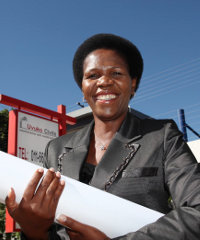
3. Divine Ndhlukula , Founder & CEO, Securico & Grand Prize Winner, AAE 2011 - Zimbabwe
4. Adedotun Sulaiman , Founder & Chairman, Arian Capital Management - Nigeria
5. Yvonne Ike , CEO, West Africa, Renaissance Group - Nigeria

Commenting on the announcement, Mr Fred Swaniker CEO of the African Leadership Network (ALN), said: "We are thrilled by their acceptance to serve as judges for the 2012 AAE and we commend their exemplary contribution to inspiring the next generation of entrepreneurs in Africa. The Africa Awards for Entrepreneurship are a powerful and prestigious platform to spotlight the best of the best among Africa's entrepreneurs."

The awards were previously owned and coordinated by the Legatum Group and are this year being managed by the African Leadership Network. The Awards Gala Ceremony will be held on 11 October 2012, in Accra, Ghana at the African Leadership Network's flagship yearly event, the ALN Annual Gathering. The awards will have four categories:

• Lifetime Achievement Award to be bestowed on a remarkable senior and iconic African business leader that has left an enduring legacy of decades of entrepreneurial success in Africa.
• Transformational Business Award to be awarded to an outstanding African entrepreneur who has built a company with revenues greater than USD 50 million.
• Outstanding Mature Business Award for a remarkable African entrepreneur with a business that has made revenues between USD 5 million – USD 50 million.
• Outstanding Small and Growing Business Award to be given to a stellar African entrepreneur with a business that has revenues between USD 500,000 and USD 5 million.

Comment on the announcement, Divine Ndhlukula, a member of the judging panel, and the Overall winner for the Awards last year, said:

"With the African Leadership Network taking the lead in the management and hosting of the awards, the awards should serve as a focal point for recognising and rallying the next generation of entrepreneurs in Africa. In its sixth year now, it is essential to see more African women entrepreneurs recognised for their achievements and I encourage people to nominate outstanding women entrepreneurs for the Awards."

The competition for the Awards opened 5 weeks ago and runs until 31 August 2012.

Sunday, 12 August 2012

Above All You Must Believe.

“A warrior feeds his body well, he trains it, works on it. Where he lacks knowledge, he studies. But above all, he must believe. He must believe in his strength of will, of purpose, of heart and soul.” - David Gemmell -