Wednesday, 17 August 2016

Pan Africa Insurance Holdings Limited has rebranded to Sanlam Kenya

Pan Africa Insurance Holdings rebrands to Sanlam Kenya

By Nicholus Nduati
Pan Africa Insurance Holdings Limited has rebranded to Sanlam Kenya, a financial services group currently listed on both the Johannesburg and the Namibian Stock Exchange.
Sanlam Kenya CEO Mugo Kibati says the rebrand has positioned the firm to offer Kenyans greater access to a comprehensive and tailored range of insurance and investment financial solutions.
The rebrand according to Kibati aims to offer Kenyan shareholders, clients and other stakeholders the added comfort and security of doing business.
Currently, Sanlam Kenya enjoys an estimated market share of 8 percent in the Kenyan life insurance industry.
The move sees Pan Africa Insurance Holdings subsidiaries, Pan Africa Life, Pan Africa Asset Management, Gateway Insurance and PA Securities also rebrand to Sanlam Life Insurance, Sanlam Investments, Sanlam General Insurance and Sanlam Securities respectively.
Sanlam Kenya has lined up a variety of general insurance and investment financial products to be launched soon.
The Sanlam Group currently has businesses in 33 countries across Africa and first acquired a stake in Pan Africa Insurance Holdings Limited in 2006, following Sanlam’s acquisition of African Life Assurance Group.

Pan Africa Life Insurance/Assets now Sanlam Kenya set to offer products through Mobile Phones

Sanlam Kenya, formerly Pan Africa Life Insurance, has disclosed plans to offer insurance products through mobile phones in an effort to boost uptake. 
By GEORGE NGIGI


Posted  Wednesday, August 17   2016 at  18:19  http://www.businessdailyafrica.com/Sanlam-Kenya-plans-insurance-products-through-mobile-phones/539552-3348240-item-0-nh24stz/index.html 
IN SUMMARY
  • The system upgrade by the insurer was, however, problematic resulting in the loss of clients and intermediaries following delays and inaccuracies in premium calculation.
  • Linda Jamii is a micro-health cover that was launched in January 2014 together with Safaricom and Changamka Microinsurance targeting the underserved low end of the market.
Sanlam Kenya, formerly Pan Africa Life Insurance, has disclosed plans to offer insurance products through mobile phones in an effort to boost uptake.in
The insurer last year upgraded its systems to support introduction of new technology-driven services.
Insurance penetration in the country has remained low especially in life business, which is viewed as a preserve of the wealthy.
“The only way to increase penetration of insurance is to use different means away from the traditional agency operation to include digital operations and partnerships,” said Mr Ian Kirk, the chief executive of Sanlam Group.
He, however, declined to disclose the time-lines in which the company is expected to launch the mass market products.
Insurance agents and brokers are the source of 83 per cent of business booked by insurers in the Kenyan market.
The system upgrade by the insurer was, however, problematic resulting in the loss of clients and intermediaries following delays and inaccuracies in premium calculation.
Sanlam’s new life business sales for last year declined by 19 per cent leading to shrinkage of its market share to eight per cent at the end of 2015 from 9.8 per cent a year earlier, according to data from the Insurance Regulatory Authority.
Rebranded
“What hit us were the initial implementation challenges where there were mismatches but now we are optimising the system,” said Sanlam Kenya Group chief executive Mr Mugo Kibati.
The insurer has rebranded to Sanlam Kenya to identify with its South Africa-based parent Sanlam Group.
Sanlam Group owns 56.3 per cent stake of the listed company, which recently added general insurance to its mainstay life insurance products.
The multinational has made known ambitions to raise its stake in the subsidiary to 60 per cent.

Friday, 8 April 2016

Pan Africa Life Additional Investments into Gateway General Insurance and Its Performance after Acquisition

Pan Africa buys additional stake in Gateway Insurance

By VICTOR JUMA, vjuma@ke.nationmedia.com  http://www.businessdailyafrica.com/Corporate-News
Pan Africa Insurance Holdings chief executive Mugo Kibati. PHOTO | FILE
Pan Africa Insurance Holdings chief executive Mugo Kibati. PHOTO | FILE 
By VICTOR JUMA, vjuma@ke.nationmedia.com

Posted  Monday, March 28   2016 at  23:00
IN SUMMARY
  • Pan Africa first bought into the general insurer in March last year, acquiring a 51 per cent stake for Sh561 million.
  • The company later raised its interest in Gateway to 56 per cent at a cost of about Sh55 million.
  • The move by Pan Africa to raise its stake in Gateway signals its confidence in the company’s future prospects though the subsidiary’s earnings have deteriorated following its acquisition.
Pan Africa Insurance Holdings has acquired an additional five per cent stake in Gateway Insurance, raising its equity in the subsidiary to 56 per cent.
The company had announced that it would buy additional shares in Gateway to make the subsidiary’s founders comply with insurance regulations that cap ownership by individuals at 25 per cent.Pan Africa chief executive Mugo Kibati told the Business Daily that the company subsequently raised its interest in Gateway to 56 per cent at a cost of about Sh55 million.
Pan Africa did not say to what level it was prepared to raise its stake in Gateway but noted that the extra shares would be bought from the family of the company’s founder, the late Godfrey Karuri.
The additional shares were to be bought at the same price of Sh17.56 per share that Pan Africa paid to buy the initial 51 per cent stake.
The move by Pan Africa to raise its stake in Gateway signals its confidence in the company’s future prospects though the subsidiary’s earnings have deteriorated following its acquisition.
Acquisition of Gateway marked a change in strategy at Pan Africa which in 2011 exited the general insurance business to focus on life policies by selling its 39.9 stake in APA Insurance for Sh855 million.
The company later said it needed to re-enter the general insurance business if it was to get a share of economic growth driven by sectors such as construction.
This prompted the Gateway acquisition whose completion coincided with increased competition in Pan Africa’s mainstay life insurance business where it previously was among the largest players.
Gateway’s performance has, however, disappointed, with Pan Africa taking a Sh564 million hit from the subsidiary last year and contributing to a 97 per cent fall in the parent firm’s profit in the year ended December.
Pan Africa reported that the excess value it anticipated from the takeover of Gateway has surpassed the net worth of the subsidiary by the Sh564 million.
This means Pan Africa paid a hefty premium in the acquisition whose payback is likely to take longer than initially expected.
The accounting loss contributed to the 97 per cent drop in the listed firm’s net profit to Sh27.3 million in the review period, down from Sh871.1 million the year before.

Wednesday, 10 June 2015

Jubilee Insurance Kenya Chief Executive Patrick Tumbo is Africa CEO of the Year in the recently concluded 42nd Conference and General Assembly of Africa Insurance Organisation (AIO)

Jubilee Kenya boss named Africa CEO of the year

By MUGAMBI MUTEGI  Posted  Tuesday, June 2  2015 at  21:18 @Businessdailyafrica
 
 
Jubilee Insurance Kenya CEO Patrick Tumbo. PHOTO | FILE
Jubilee Insurance Kenya CEO Patrick Tumbo. PHOTO | FILE 

The Jubilee Insurance Kenya CEO Patrick Tumbo has been named chief executive officer of the year at an award ceremony in which 362 member companies from across the continent participated.
Mr Tumbo got the recognition at the recently concluded 42nd Conference and General Assembly of Africa Insurance Organisation (AIO) in Tunisia.
Organisers of the awards said the winner was selected based on successful product development, excellent service delivery and introducing innovative distribution channels targeting grassroots customers.
“We need to listen to our customers and develop products that serve specific customer needs. That way, the insurance sector will experience a revolutionary change for the better,” said Mr Tumbo.
Nigeria’s Mutual Benefits Insurance won the Innovation of the Year award while the Insurance Company of the Year award went to Misr Insurance Company of Egypt.
Increased premiums
Jubilee Holdings reported a 24 per cent jump in net profit for the year ended December to Sh3.1 billion, helped mainly by increased premiums, with Kenya being its biggest contributing business unit.
Gross premiums increased 30 per cent to Sh30.3 billion, making the company Kenya’s largest in both general and life insurance business.
The insurer recorded double-digit growth in all its insurance operations, including pensions and medical.
The AIO is made up of member insurers across 55 countries in Africa.
The awards are meant to promote growth of the insurance sector through good corporate governance, insurance practice, leadership and risk management.
“Sharing and dissemination of new successful and practical ideas in the industry can be a great tool to fast-track the development of insurance in the continent,” said AIO secretary-general Prisca Soraes.
The conference, which took place between May 24 and May 27, focused on the rise of political risk in the continent and the need for new risk pools to respond to natural catastrophic risk.

Monday, 6 April 2015

Pan Africa Insurance Holdings Limited acquires a 51% majority shareholding in Gateway Insurance Company Limited.


Pan Africa Insurance buys stake in Gateway Insurance

Daily Nation,  Wednesday, March 18, 2015


Pan Africa Insurance Holdings Limited has acquired a 51 per cent majority shareholding in Gateway Insurance Company Limited.
Shareholders of the latter will get Sh561,023,562 in exchange for 31,948,950 ordinary shares priced at Sh17.56 apiece.
“We are delighted to have concluded this transaction, giving us a majority stake in Gateway. Pan Africa’s Group strategy includes diversifying investments in a way that will maximise and meet client expectations while growing shareholder value. We are on a path to make Pan Africa a one-stop-shop for our client financial solutions,” board chairman John Simba said.
He said the company had returned to general insurance at a time when figures indicated that insurance penetration was low, therefore, providing huge opportunity for growth.
A CRITICAL COMPONENT
“Financial services are a critical component of any economy which intends to record sustainable growth. Insurance companies only account for 32 per cent of financial service providers in Kenya excluding co-operative societies and a measly 0.3 per cent when cooperative societies are included.
“This means that while a savings culture is budding among our people - which is how it should be - there is a gap in the area of risk management which cannot be ignored,” Mr Simba said.
“Gateway’s established brand in short-term insurance service and a countrywide presence fits well into Pan Africa strategy.”
The group structure will change to incorporate the new general insurance subsidiary so that management of the firm will be at holdings level by the group chief executive, while business lines (Life, General and Asset Management) will be headed by the respective chief executives.
Group chief executive Mugo Kibati said the new business venture would “see Pan Africa compete effectively” with their peers in the industry.

Thursday, 26 February 2015

Karibu new Pan Africa Holdings CEO - Mugo Kibati. Currently the Chairman of Lake Turkana Wind Power Ltd

Mugo Kibati joins Pan Africa Holdings as Chief Executive 

By GEORGE NGIGI, gngigi@ke.nationmedia.com http://www.businessdailyafrica.com/Corporate-News

Mugo Kibati, chairman of Lake Turkana Wind Power (LTWP) Ltd. PHOTO | FILE

  • The company has been searching for a chief executive after Tom Gitogo resigned to join CIC Insurance in September last year.

Former Vision 2030 director Mugo Kibati has been appointed Group Chief Executive Officer of Pan Africa Insurance Holdings Ltd. He his currently the chairman of Lake Turkana Wind Power (LTWP) project, which has won the African Renewables Deal of the Year 2014 after it successfully structured Sh70 billion financing. http://www.businessdailyafrica.com/Lake-Turkana-wind-project-wins-deal/-/539552/2635528/-/hdd6yl/-/index.html

The position is new to the company which has a life assurance business, general insurance arm - Pan Africa Securities and an asset management subsidiary.
Pan Africa also confirmed Stephen Kamanda as the chief executive of its assurance business.
The company has been searching for a chief executive after Tom Gitogo resigned to join CIC Insurance in September last year.
Mr Kibati previously served as managing director of East African Cables before he was appointed by the government to head the Vision 2030 secretariat. He holds a degree in electrical engineering, a masters degree in international business and a masters degree in technology and policy.
Last week Pan Africa announced issued a profit warning which has seen its share price at the Nairobi Securities Exchange drop by 9.3 per cent in the last five trading sessions.
  • The insurer said that gains from the NSE last year were lower compared to 2013, which was further compounded by reduced deals in the property market.
  • Analysts said the performance is representative of the insurance industry whose results are influenced by NSE’s.
  • Pan Africa’s net profit grew 31 per cent to Sh295.5 million in 2013 and the profit alert means it will post earnings below Sh221 million.
The insurer attributed the drop in profits to lower gains in the equities market compared to 2013 and reduced deals in the property market.

Monday, 24 November 2014

Bitcoin Digital Lessons from M-pesa

Digital Currency Regulation in East Africa

by http://community.ihub.co.ke/blogs/21645/digital-currency-regulation-in-east-africa

Digital Currency Regulation in East Africa
Guest Blog: Michael Kimani
What is Bitcoin? – A puzzling question posed by everyone coming across Bitcoin for the first time. The Bitcoin Kenya Meet up group regularly convenes at the iHub for monthly open discussions on this subject. The discussion on November 5 was ‘BitLegal Status Around the World’ – a cursory look at what regulators and government authorities all over have to say about new forms of digital currency. It is important as it defines a domain for regulators in East Africa. Interestingly, regulators just like regular folks, have trouble wrapping their head around ‘What is Bitcoin?’
IMO, Bitcoin is what Nassim Taleb - a scholar, refers to as a black swan
“An event that comes as a surprise, has a major effect, and is often inappropriately rationalized after the fact with the benefit. image 2
Bitcoin is one of the most important breakthroughs of the digital age since the internet! Bitcoin is a global secure layer on top of the internet with online payment capabilities. Just to get a clear picture of how immense it is, this brief 4min video will get you up to speed.
Bitcoin is a platform with a long list of possible applications built on top of it. One of these apps, is bitcoin, the currency. These features make it a unique global payment network that anyone can take part in. It is a currency, asset, platform, decentralized network – all wrapped into one burrito.
Understandably, government agencies and financial regulators find it difficult to demarcate a regulatory framework for innovative digital currencies such as Bitcoin. Largely, it has been a net positive; a mixed bag of official statements falling on the‘Wait and See’ approach, early guidance on its use, adoption and Bitcoin start-ups. A couple have out rightly banned its use – Iceland and Ecuador in favour of their own digital currency.
Digital Currency Regulation in Kenya – Lessons from Mpesa
In a lot of ways, the ongoing debate on Bitcoin regulation in the rest of the world is surprisingly similar to that of MPESA in its infancy stage (Pre- 2008). Mpesa, just like Bitcoin was a unique innovation that did not fall within existing regulatory framework during the time. A case study report by the AFI [Enabling Mobile Money Transfer – CBKs treatment of Mpesa] pdf here, details the early regulatory considerations of Mpesa involving multiple stakeholders – GoK, National Assembly, Safaricom, Central Bank of Kenya, Banks and the Kenyan public.
In retrospect, we can all agree it was wise to foster Mpesa. Because it remedied an immediate financial inclusion challenge, letting it grow into its potential was crucial all the while adhering to money laundering and money transfer regulations. Was it a bank? Was it a payment network? Did it fall under the law?
Eventually, the ability of this innovation to radically offer access to financial services by the unbanked tipped the scale and won it for Mpesa. A watershed that has defined Kenya in more ways than we can quantify. The Central bank of Kenya commendably handled it well, recognizing the best way to tap into the mobile phone as a money transfer tool.
Bitcoin regulation around the world
pic 3
Thiswiki is a comprehensive start for a full list of what regulators’ guidance in different countries, albeit several months old has been.
Bitcoin and digital currencies have a place in connecting Kenya and East Africa to the global market and commerce. Mpesa has worked well for money transfers within the country – Bitcoin and digital currencies complement that by making global payments faster, cheaper and straight into/from your phone!  The internet made it possible for all of us to take part in a global economy, Bitcoin enhances global value exchange as cash for the internet!
Finally, if you couldn’t make it for our meet up, you can view the slides here. We are having our next meet up on the 1st of December on ‘Buying, Selling, Trading and Securing Bitcoins’ at the iHub. See the event detailshere. For questions and info, email us atinfo@africandca.orgor myself atmkimani@africandca.org.


About the Author:Michael Kimani is the Lead Coordinator at the ADCA @African_DCA www.africandca.org Based in Nairobi, Kimani advocates bitcoin & digital currencies in East Africa. He also regularly writes on digital finance, electronic payments and digital currencies in East Africa on @pesa_Africa.

Monday, 25 August 2014

World Biggest Transportation Conglomerate -MAERSK GROUP

 Maersk Business (Sea and Land) - Brave, Courageous, Bold, Fearless, Intrepid, Heroic, Lionhearted

Conglomerate: Maersk Group
Maersk Group has four core businesses which include Maersk Line, APM Terminals, Maersk Oil and Maersk Drilling. Through these companies and several others, the group employs roughly 89,000 people, and generated 47 billion US dollars in revenue in 2013.

As a group, MAERSK business success is built on a number of strengths: our size and global reach, our financial strength, our talented employees, our time-honoured values, our approach to sustainability and our drive to innovate. Combined, these strengths form a unique platform for our continued success and future growth. http://www.maersk.com/


Ownership: 1904 Founded 

A.P. Moller–Maersk Group, Danish: A.P. Møller–Mærsk A/S, Danish pronunciation: also known as Maersk, is a Danish business conglomerate. A.P. Moller – Maersk Group has activities in a variety of business sectors, primarily within the transportation and energy sectors. It has been the largest container ship operator and supply vessel operator in the world since 1996


Operations: Both Sea and Land
  A.P. Moller – Maersk Group is based in Copenhagen, Denmark, with subsidiaries and offices in more than 135 countries worldwide and around 108,000 employees. It Oprates in Both Sea and Land Transportation and Energy operations.

It ranked 147 on the Fortune Global 500 list for 2010, down from 106 in 2009.

 
Investments:   Oil and gas activities Maersk Oil
Maersk Oil (Danish: Mærsk Olie og Gas A/S) was established in 1962 when Maersk was awarded a concession for oil and gas exploration and production in the Danish sector of the North Sea.

Today, Maersk Oil is engaged in exploration for and production of oil and gas in many parts of the world. Total oil production is more than 600,000 barrels per day (95,000 m³/d) and gas production is up to some 1 billion cubic feet (28,000,000 m³) per day. Most of this production is from the North Sea, from both the Danish and British sectors, but there is also production in offshore Qatar, in Algeria and in Kazakhstan.

In addition to the above-mentioned producing sites, Maersk Oil is involved in exploration activities in Danish, British, Dutch and Norwegian sectors of the North Sea, Qatar, Algeria, Kazakhstan, Angola, Gulf of Mexico (US sector), Turkmenistan, Oman, Morocco, Brazil, Colombia and Suriname. Most of these activities are not 100% owned, but are via membership in a consortium.

The company prides itself for having developed production techniques especially suited to difficult environments (North Sea, etc.) and for drilling techniques that succeed in extracting oil from problematic underground conditions. 


Investments Shares and Stock Exchange:
 "Oil and gas activities" provided A.P. Moller – Maersk with 22% of its revenue and 68% of its profit in 2008.A.P. Møller – Mærsk A/S is listed on the Copenhagen Stock Exchange. Shares in the company are divided into A and B shares, with only A shares conferring voting rights. The group currently has some 66,000 shareholders.

Thursday, 14 August 2014

Best Insurance Companies in Kenya Past Performance

Pan Africa Life Innovation and Jubilee Lifetime Achievement
Article @By: Yarinka Lukiza
http://www.bizrika.com/banking-and-finance/best-insurance-companies-in-kenya-named/

The 2011 best insurance companies in Kenya were named in the annual gala night organized by Think Business; a Kenyan based financial sector-focused company that specializes in strategic business intelligence, research and publishing.
During the colorful gala night held at a Nairobi hotel on 21 July, Chartis Kenya and Pan Africa Life were named the best insurance companies in Kenya in the General Life and Composite Business categories. The first and second runners-up positions in the best business category went to Jubilee and CIC Insurance respectively, while British American Insurance and Jubilee Insurance clinched first and second positions respectively in the Life Business category. CIC Insurance was declared the only runner-up in the Composite Business category.
Pan Africa Life and Jubilee Insurance emerged best in the Best Company in ICT category, coming in first and second place respectively. No company was deemed fit to win the Best Corporate Broker category.
Jubilee Insurance showed up again to scoop the Best Insurance Company in the Risk Management category.

Other awards and winners

Best Insurance Company in Claims Settlement (Life Business)
Winner: Apollo Life Assurance
Runners-up: Pan Africa Life and CIC Insurance
Best Insurance Company in Claims Settlement (General Business)
Winner: APA Insurance
Runners-up: Chartis Kenya and Jubilee insurance
Major Loss Award
Winner: Jubilee Insurance
Runners-up: APA Insurance
Best Fraud Detection and Prevention Initiative
Winner: Pan Africa Life

Best Medical Insurance Provider

Winner: AAR Health Services
Runners-up: Goldstar Health Care
Best Medical Insurance Underwriter
Winner: Jubilee Insurance
Best Customer Service Innovation
Winner: Jubilee Insurance
Runners-up: CIC and AAR
Best Insurance Company in Customer satisfaction
Winner: CFC Life
Runners-up: Britak and Kenindia
Best marketing Initiative of the Year
Winner: CIC Insurance
Runners-up: APA and Jubilee Insurance
Best Training Initiative of the Year
Winner: CIC
Runners-up: Pan Africa Life and Jubilee Insurance
Most Socially Responsible Corporate
Winner: AAR Health Services and Jubilee Insurance
Overall, Jubilee Insurance won the largest number of awards. The company bagged 11 awards in total and crowned it with the Lifetime Achievement in Insurance Award which went to Nizar Juma, the Jubilee Holdings chairman.
Commenting on the awards, Mr. Ochieng Oloo, the CEO of Think Business, said 2010 was a good year for the Kenyan insurance sector, as demonstrated by strong growth in total assets which went up from Ksh174 billion in 2009 to Ksh240 billion in 2010, representing an increase of 27%.
The industry’s profit before tax swelled by a record 42% to hit Ksh11.9 billion, up from Ksh6.8 billion in 2009.
Medical cover leading
Of all the insured Kenyans, 74% have taken up medical cover while 69% have insured against motor vehicle risks. Insurance covers for assets, education and accident account for 40%, 44% and 48% respectively.

Friday, 6 June 2014

County Civils: Excavation, Grinding and Backhoe Loading

Meru Country Roads Construction and Upgrading through Malaysia

On Wednesday the Meru County Assembly approved the construction of a 10Km pilot Probase Road section from Kianjai to Miathene with further 4Km bitumen road section, on the same road, to be constructed by the National Government for comparison purposes. This will pave way for construction of a further 300Kms of Probase roads across Meru County, where each of the nine Sub Counties will get 30 KMs. The roads to be constructed will be identified by the sub county residents.


 The entire project will cost Ksh. 6 Billion and it will be funded by the EXIM Bank of Malaysia. The 10Km pilot Probase Road section will cost KSh. 310 Million.
MERU TOWN, Hon Peter Munya, Meru, Kenya, The National Construction Authority, EXIM Bank Bangladesh Limited, Caterpillar Inc., @CMC Motorrs, Excavators, Backhoe, JCB 3CX- Backhoe Loader
 The infrastructure of Malaysia is one of the most developed in Asia.[159] Its telecommunications network is second only to Singapore's in Southeast Asia, with 4.7 million fixed-line subscribers and more than 30 million cellular subscribers.[160][161] The country has seven international ports, the major one being the Port Klang. There are 200 industrial parks along with specialised parks such as Technology Park Malaysia and Kulim Hi-Tech Park.[162] Fresh water is available to over 95 per cent of the population

Tuesday, 3 June 2014

Africa Biggest Economy is Nigeria

Nigeria overtakes South Africa as continent’s largest economy


Nigeria today officially overtook South Africa as the largest economy on the continent, after the West African country changed the base year for calculating its gross domestic product (GDP).
Nigeria’s National Bureau of Statistics (NBS) on Sunday presented the country’s rebased GDP figure, revealing the economy is significantly bigger than originally reported. Nigeria’s GDP in 2013 was US$509.9bn, much higher than that of South Africa.
The base year is the benchmark for all calculations used in working out the GDP of a country, as it determines the year in which prices are held constant and enables one to distinguish between economic growth and inflation.
The majority of higher income countries revise their base year every five years to reflect changes in the nature of output and consumption. Up until today, Nigeria’s GDP was calculated using 1990 as the base year, which does not account for the rapid development of some of the country’s booming industries, such as telecommunications and entertainment (notably the Nollywood film industry).
Nigerians however shouldn’t expect to see any material benefits from the GDP rebasing. According Renaissance Captial chief economist Charles Robertson, the rebasing is simply “the NBS… doing a better job in measuring the output that is already happening”.
“Improving the measurement of GDP does not raise monthly wages. It does not lift consumption of imports. It does not make Nigeria better off in any obvious material way… The important fact to bear in mind is that GDP is only being recorded better. Rebasing does not mean Nigerians are better off – it just means they are better off than official statistics previously indicated,” said Robertson in an earlier note.
Being Africa’s largest economy could however hold some psychological advantages. “It would be interesting to see how international relations will be affected when South Africa is no longer the largest African economy – South Africa is, for example, the only African country represented in the G20,” wrote Roelof Horne, portfolio manager at Investec Asset Management in an opinion piece published by How we made it in Africa on Friday.
“South Africa was historically the ‘go-to’ country for investment into Africa. However, the reality is that other regions are increasingly asserting their economic voice and this has resulted in several multinational corporations opting to have their Africa base in countries such as Kenya or Nigeria, instead of South Africa,” Horne added.
The rebasing will also improve Nigeria’s balance sheet. “This should lead to lower borrowing costs for the government, which is ultimately beneficial for the country’s citizens,” said Horne.
According to Robertson, Nigeria’s growth rate is likely to be revised down following the rebasing. “Instead of around 7% annual growth over the previous decade, the higher GDP base means growth may turn out to have been closer to 5-6%.

Wednesday, 13 November 2013

Kenya Insurance Company Buys South Africa Based Asset Management Firm

Pan Africa Insurance closes Sanlam Kenya acquisition

By GEORGE NGIGI, Business Daily http://www.businessdailyafrica.com/ @All Rights Reserved

Members of the public pass by a Sanlam billboard in Nairobi. Pan Africa Insurance has bought the Kenyan operations of the SA firm. FILE
Members of the public pass by a Sanlam billboard in Nairobi. Pan Africa Insurance has bought the Kenyan operations of the SA firm. 
In Summary
  • Pan Africa Insurance said it had acquired 72.5 per cent shares of Sanlam and a further 10 per cent stake owned by a former chief executive of the investment firm.
  • The acquisition gives the insurance firm a free hand in the management of funds mobilised through its life business.
  • Unit trusts have are becoming more popular in the country following their opening up to the lower end market by inviting small savers to their fold.

Pan Africa Insurance has bought out the Kenyan operations of South Africa-based assets manager Sanlam Investment, concluding a phased acquisition that started in 2008. 
The Nairobi Securities Exchange listed insurer said that it had acquired 72.5 per cent shares of Sanlam and a further 10 per cent stake owned by a former chief executive of the investment firm.
The acquisition gives the insurance firm a free hand in the management of funds mobilised through its life business.
“The transaction will result in Sanlam Investment Management Kenya being a wholly owned subsidiary of the company. This will enable easier distribution of investment products by the group’s financial advisors,” said Pan Africa’s chief executive Tom Gitogo.
Both firms have common shareholding in South Africa’s Sanlam, a financial services group that is listed at the Johannesburg Stock Exchange and Namibian Stock Exchange.
The insurer follows the footstep of other insurance companies such as CIC, Britam and UAP that have lately opened their own fund management firms to invest their collections from life policies.
Pan Africa declined to disclose the value of the transaction, stating that it was based on the net book value as at end of last year. Pan Africa bought a 17.5 per cent stake in Sanlam for Sh3.8 million in 2008 in a deal that at the time valued the fund management company at Sh21.7 million.
Sanlam, the parent company, owned 55.7 per cent of Pan Africa Insurance as at the end of 2012 through an entity named Hubris Holdings Ltd.
It has however stated that it wants to increase its shareholding in the insurance company to 60 per cent by buying shares in the open market so as to have more control of its management.
Mr Gitogo said the acquired firm would retain its name while disclosing intent to invite individuals and institutions to invest through them using unit trusts. “We are looking forward to entering the unit trusts market,” he said.
Unit Trusts provide investors an opportunity to invest in a portfolio of stocks or fixed-income securities or both, without directly going to the market themselves. The investors deposit funds with fund managers, who charge them a management fee for their services.
Unit trusts have are becoming more popular in the country following their opening up to the lower end market by inviting small savers to their fold.
On Tuesday the insurer’s share price went up by two shillings to Sh61.50, on a trading volume of 25,000 shares.Awesome Insurance

Tuesday, 15 October 2013

How to screw business as usual for start-ups - Virgin.com

How to screw business as usual for start-ups - Virgin.com

Top tips for start-ups on how you can screw business as usual from the beginning.

1) Community Bulding
2) Going Green From the Start
3) Happy people
4) Test Yourself

Screw Business as Usual is Richard Branson's book about changing the world. Just by buying this book you'll make a difference as 100% of Richard's royalties go to Virgin Unite, to support our entrepreneurial initiatives on the front lines.

Monday, 14 October 2013

You Need to Stop Looking for a Rule Book to Success.

There’s No Rulebook For Success

You need to stop looking for a rule book to success. There is no such thing. You can learn from other people experiences, but focus on creating your own. Other people’s experiences are a good starting point, but don’t try to experience the exact same thing. Life is about creating your own experience. Grasp their stories and develop qualities like foresight, determination and resiliency.
Read more at http://under30ceo.com/theres-no-rulebook-for-success/#BFVDCq068Vf5Do88.99
 There is no such thing. You can learn from other people experiences, but focus on creating your own. Other people’s experiences are a good starting point, but don’t try to experience the exact same thing. Life is about creating your own experience. Grasp their stories and develop qualities like foresight, determination and resiliency. 
 Test your perseverance
 Visualize the unseen
 Plan your product instead of just ideating

Plan your product instead of just ideating
Read more at http://under30ceo.com/theres-no-rulebook-for-success/#BFVDCq068Vf5Do88.99Visualize the unseen
Plan your product instead of just ideating
Read more at http://under30ceo.com/theres-no-rulebook-for-success/#BFVDCq068Vf5Do88.99
Read More: http://under30ceo.com/theres-no-rulebook-for-success/?utm_source=rss&utm_medium=rss&utm_campaign=theres-no-rulebook-for-success
You need to stop looking for a rule book to success. There is no such thing. You can learn from other people experiences, but focus on creating your own. Other people’s experiences are a good starting point, but don’t try to experience the exact same thing. Life is about creating your own experience. Grasp their stories and develop qualities like foresight, determination and resiliency.
Read more at http://under30ceo.com/theres-no-rulebook-for-success/#BFVDCq068Vf5Do88.99
You need to stop looking for a rule book to success. There is no such thing. You can learn from other people experiences, but focus on creating your own. Other people’s experiences are a good starting point, but don’t try to experience the exact same thing. Life is about creating your own experience. Grasp their stories and develop qualities like foresight, determination and resiliency.
Read more at http://under30ceo.com/theres-no-rulebook-for-success/#BFVDCq068Vf5Do88.99
You need to stop looking for a rule book to success. There is no such thing. You can learn from other people experiences, but focus on creating your own. Other people’s experiences are a good starting point, but don’t try to experience the exact same thing. Life is about creating your own experience. Grasp their stories and develop qualities like foresight, determination and resiliency.
Read more at http://under30ceo.com/theres-no-rulebook-for-success/#BFVDCq068Vf5Do88.99

Wednesday, 9 October 2013

Gina Din Corporate Communications (GDCC), Meet the Boss Woman, Gina Din-Kariuki.

Meet the Boss: Gina Din-Kariuki, founder and chairwoman at GDCC Kenya

Gina Din-Kariuki, founder and chairwoman of GDCC
Meet the Boss is a How we made it in Africa interview series in which we pose the same 10 questions to business leaders across the continent.
1. What was your first job?
I started being an entrepreneur when I was very young. My parents owned a hotel in Nanyuki and I needed to make pocket money. So, I started a disco night in the hotel. I must have been about 15. I would have a disco night twice a week and I would charge an entry fee. That was my first job and business.
2. Who has had the biggest impact on your career and why?
I have had so many really strong shoulders to stand on, I must say that. The person that I grew the most with, professionally, is Michael Joseph (former CEO of Safaricom). We had a very long relationship and I started [working] with him when Safaricom first came. He pushed us to our limits. He made us up our game. We had a very vibrant [relationship]. If there was one person that made me grow professionally I would say it was him.
3. What parts of your job keep you awake at night?
I worry about my brands. If my client is going through something awful then I kind of tend to take on that worry. They are my partners, so whatever my client is going through transfers on to me.
4. What are the top reasons why you have been successful in business?
I am resilient. I am very good networker. I am a connector. My business is all about relationships; that’s all we have. So I am good connector… I generally connect with people at every level.
5. What are the best things about your country?
The resilience. I think Kenyans are the most beautiful people in terms of their spirit [and] the warmth. You know my children [aged 17 and 23] were raised by the same nanny. She is what embodies the Kenyan spirit. She is a strong, resilient, warm, loving person. That for me is what Kenya is all about.
6. And the worst?
I think what is very sad about our country is that we are still so tribal. We will come together at a time when we need to and then as soon as that crisis is over we then go back to our tribal cocoons. It’s sad. I just wonder when we will break out of that cycle because you see it from generation to generation to generation. That is the biggest problem that we have as a country. We need to get out of that.
7. Your future career plans?
My focus is going to be on making my brand an African brand. We are in the region already but, having travelled around Africa in the last two years extensively, I can see the need for an African PR brand. I want to take my seat at the table.
8. How do you relax?
I am one of those people who really enjoys the fruits of my labour. I love doing work that matters, but I love to enjoy what I have worked for. So I travel, I have the most incredible family and I spend a lot of time with them. We do lots of fun thing; we travel to lots of new places. My daughter and I are real adventurists so we are always looking for new places to go. I like massages. I love to spend an evening with friends. I am not a workaholic. I think I used to be but I am not [anymore]. I have now come to a point where I have realised that actually, if you have a passion for what you are doing you don’t need to spend the whole time doing it because when you are [doing] it you are going to do it very well. I love what I do. And money will follow that passion.
When am I off work I do lots of fun things. A lot of the things that I am doing now are meaningful things in terms of using the contacts that I have to create change, getting young people and mentoring them and recently starting my foundation which I am putting a lot of time and effort into. You know I am 52, I want to spend the next few years really making an impact on people’s lives.
9. What is your message to Africa’s young aspiring business people and entrepreneurs?
I would say to them that they should be confident enough to do it. Sometimes we hear a lot of talk… but when it comes to that moment of saying: ‘I am going to put myself out there,’ they panic. You have to be very brave and you have to go out there. You have to be prepared for failure, and it’s not the end of the world. I look at my journey and I have failed so many times. I left my job because I wanted to create my dream job and I did. I created not only my dream job, but I created my dream life. I think that is what is so exciting about something on your own… you are not only creating your dream job, you are creating a dream life [for yourself and] for so many others.
10. How can Africa realise its full potential?
What had happened before is that we helped to prepare the meal, other people ate it… and we didn’t even sit at the table. I think what we are doing now is that we are cooking it and we have brought our stool to the table… and we are taking our seat as global entrepreneurs [and] as a continent that needs to be watched. We are here because this is the best continent for investment, this is the best continent for human capital and we’ve got it going here.
It is so important that we take people with us, that the middle class expands and the way that some of us can help [to do] that is by creating this level of youth coming into entrepreneurship. If they sit there waiting for jobs, they are going to be sitting there waiting forever. Even if you look at every organisation in Kenya, how many people can they realistically employ? Governments need to really push this agenda of youth entrepreneurship. I am really keen on that. I am excited for Africa, I really am.
Gina Din-Kariuki is the founder and chairwoman of Gina Din Corporate Communications (GDCC), a professional communications consulting firm

Monday, 29 July 2013

Africa Property Investment Summit about African Real Estate Investment and Development: Sept 2013

Africa Property Investment Summit: 3-4 September 2013

BY | July 11, 2013 at 15:07 http://www.howwemadeitinafrica.com
If investment and development feature strongly on your business agenda, then this commercial property forum is not to be missed. An annual event, the African Property Investment Summit has earned the respect of the industry and is an anticipated event on the African real estate calendar.
The Africa Property Investment Summit is fast approaching with limited bookings available. The two-day event, taking place in Johannesburg from 3-4 September 2013, will be once again be held at the beautiful Sandton Sun Hotel.
This summit presents a professional platform for learning about African real estate investment and development. Following its success in 2011 and 2012, the summit returns with the support of more industry heavyweights and an agenda designed to draw the leading minds in the property arena.
This is a unique opportunity to discuss current trends, share industry experiences and enjoy insightful debate. If you are committed to an African growth strategy, this is a property event you cannot afford to miss.
This year’s event features an exciting line up of speakers and panel discussion participants actively doing deals across the continent.
The two day conference package (R7,950/$895) includes all lunches and refreshments, an invitation to the gala dinner, parking and full access to all research, presentations and documentations. For booking information and enquiries contact Muhammad Joosub on muhammad@apisummit.co.za or +27 11 593 2288 or visit www.apisummit.co.za

Friday, 26 July 2013

Nairobi’s Prime Real Estate Growing by 25% faster than Miami (19.1%), London (12.1%).

Kenya’s luxury property market records highest growth globally in 2011


Kenya’s luxury real estate saw the greatest price increase globally in 2011, according to Knight Frank’s Prime International Residential Index (PIRI), which monitors price changes across the world’s top-end property markets.
Price growth in both Kenya’s capital Nairobi and the country’s Indian Ocean coastal hot spots was more than any of the other global locations included in the Index, with the value of Nairobi’s prime real estate growing by 25% in 2011 and the Kenyan coast by 20%.
Knight Frank defines “prime property” as a location’s most desirable and usually most expensive real estate.
Kenyan luxury real estate prices grew faster than major cities such as Miami (19.1%), London (12.1%), Moscow (9.8%), New York (3.1%), Shanghai (-3.4%) and Singapore (-4.7%).
It should, however, be noted that Kenya’s growth comes from a base of relatively low luxury property prices. The average price per square metre of prime real estate in Nairobi is only US$1,700, which doesn’t even compare with cities such as Monaco ($58,300/sq m), London ($48,900/sq m), Beijing ($17,400/sq m) or Mumbai ($11,400/sq m).
Increasingly affluent buyers from emerging markets are boosting residential property prices in developed world locations such as Miami, London and Vancouver. “When asked which nationalities will become most important as prime property buyers over the next five years, Chinese, Russian, Middle Eastern, Latin American and those from other growth economies consistently top advisors’ lists,” notes Liam Bailey, head of residential research at Knight Frank.
The reason for this is that many of the newly rich in the developing world fear that issues such as corruption and politics can pose a risk to property investments in their home countries. They therefore prefer safe haven locations such as London, which has a cosmopolitan environment, good education and both personal and property security.
Bailey says that New Zealand’s isolation from the world’s conflict zones makes it possibly the ultimate safe haven destination for the world’s super-rich.
Although ‘safe haven’ isn’t necessarily a phrase many people would use to describe Kenya in a global context, compared to its neighbouring countries it is just that, commented Ben Woodhams, managing director of Knight Frank Kenya.
Woodhams added that Kenya’s fast economic development is attracting domestic and international private equity. However, recent events such as the kidnapping of tourists staying on Kenya’s north coast and a steep rise in interest rates to almost 25% also highlight the potential vulnerability of some emerging prime markets.
Saskia Sassen, co-chair of the Committee of Global Thought at Columbia University and the person who coined the term ‘global city’, said that Nairobi is becoming “increasingly important in a rapidly urbanising world”.

Monday, 22 July 2013

Women founding Big Companies in the Male Dominated Construction industry (SA)

How Rachel Tladi is making a name for herself in a male-dominated industry.


Rachel Tladi was 43 years old and working as an accountant when a client and friend challenged her to start her own construction company in South Africa. Under his mentorship, Tladi started Uvuko Civils, which was registered in 2002.
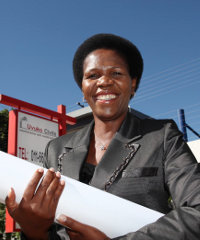
Rachel Tladi
Rachel Tladi
Uvuko Civils’ business is in building and construction and they have recently expanded the company, through a partnership with the Department of Public Works, to include repairs, maintenance and installations in the elevator industry. Uvuko Civils was founded and is wholly owned by Rachel Tladi, a determined and dynamic black woman with over 12years of experience in the civil and construction industry. http://www.uvukocivils.co.za/management.php
Last week Tladi was one of the guest speakers at the launch of the inaugural WIE Africa (which stands for Women, Inspiration and Enterprise) symposium in Cape Town, and took a moment to tell How we made it in Africa a bit about what it is like to be a woman in a typically male-dominated industry.
“You find that men [often] do not respect women and men do not believe that women can do the right thing [in business],” said Tladi. “For argument’s sake… when you have an argument and say, ‘no this is the wrong measurement,’ then they argue. They don’t take you seriously and in most cases, even when you are going to get funding, there is always an obstacle for women.”
However, in spite of the fact that Tladi feels she has to prove her business worth to men in the industry, she recognises that it was a man that actually convinced her to start her company in the first place and, in fact, provided her company with its first business. “He said, ‘this is what I am going to do, I’m going to give you a job to do for me for R250,000 and I will fund and will do everything so that you are successful’. And he took me along,” reflected Tladi.
Tladi’s success in business has been recognised in a number of awards. In 2008 she was awarded the Govan Mbeki Best Woman Builder of the Year award at both the provincial and national level. The following year she received the Provincial Govan Mbeki Woman Contractor of the Year award and in 2010 she was the recipient of the Regional Business Woman Achievers Award in the entrepreneur category, and a finalist at the World Entrepreneur Awards 2010.
Tladi is a firm believer in supporting and mentoring other aspiring business women. “How I assist other women in business is that I do skills development… and then I also do motivational talks to motivate women to be in business.”
While Tladi does feel that she is often discriminated against by men in the industry for being a woman, she feels that it can also be a challenge to instruct and mentor other women. She added that the problem with women leaders is that they don’t only face prejudice from men, but also from women, and Tladi believes that this can be a real problem for the advancement of women leaders in society.
“So the challenge as well is that you can’t give women instructions,” said Tladi. “You know, they feel that another woman is giving them an instruction and you want to take them along with you… And when you mentor a woman, you tell them about all these things, you say ‘you know when you get your first cheque you can’t go and buy something, you need to put it back into the business,’ and they think that you want to control them.”
Tladi believes that maintaining integrity and developing one’s skills are the most powerful pieces of advice she can give to other women looking to be successful in the industry, and in business in general.
“My number one advice to these women is that they must have workshops; they must work together, and have motivational talks as woman. And as a successful person, it’s not final. I’m still in a race… So for them, they must just have courage, to push to go open the door that you can’t open. And for them to be successful, they must not be afraid to ask ‘how do we do this?’ The most important thing for a woman is to have skills for them to get into this industry,” she added. “It’s not an easy industry.”